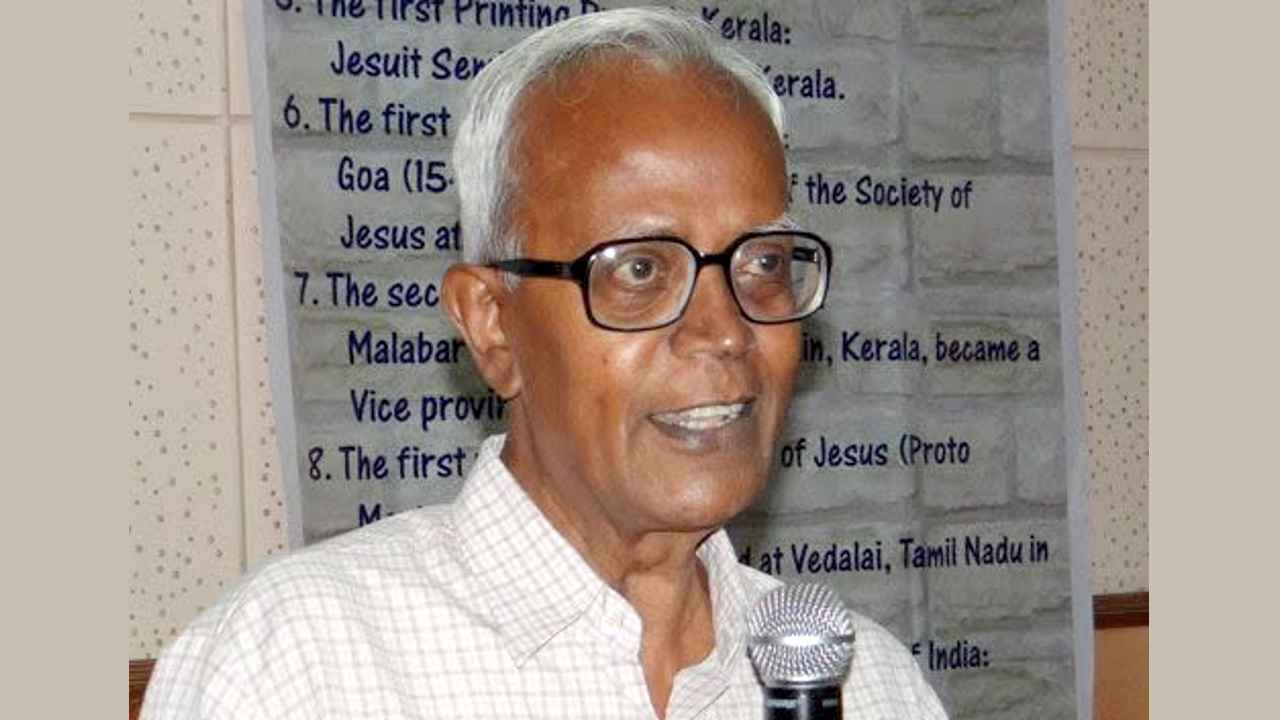
(A Tribute on the Fifth Martyrdom Anniversary of Father Stan Swamy)
With Father Stan Swamy’s death in judicial custody, the country witnessed the cruel nexus between the Modi government and the judiciary being laid bare. Eighty-four-year-old Father Stanislaus Lourduswamy was suffering from advanced Parkinson's disease, yet he was not even provided with a straw and sipper to drink water. The truth behind this act of cruelty is even more horrifying which is not confined to Stan alone. Today, after five years of his death, that horrifying truth can be seen spreading all around us.Father Stan stood firmly with the activists and movement leaders in their struggles for Adivasi communities in Jharkhand. He raised his voice against the false implication of Adivasis in criminal cases, their incarceration without trial or due process, and the continued violation of constitutional provisions in the Fifth Schedule areas.
It is due to Stan's leadership commitment that the Bagaicha, in Namkum (Ranchi), emerged as a platform and shelter for various rights movements. He built solidarity with numerous people's movements and remained a strong advocate of that unity. Stan also played a significant role in the formation of the Jharkhand Janadhikar Mahasabha, a leading platform for the struggle for constitutional and human rights. He succeeded in articulating the voice of resistance against the suppression of rights in the natural language of Adivasi identity. Bagaicha remains a living testimony to this even today.
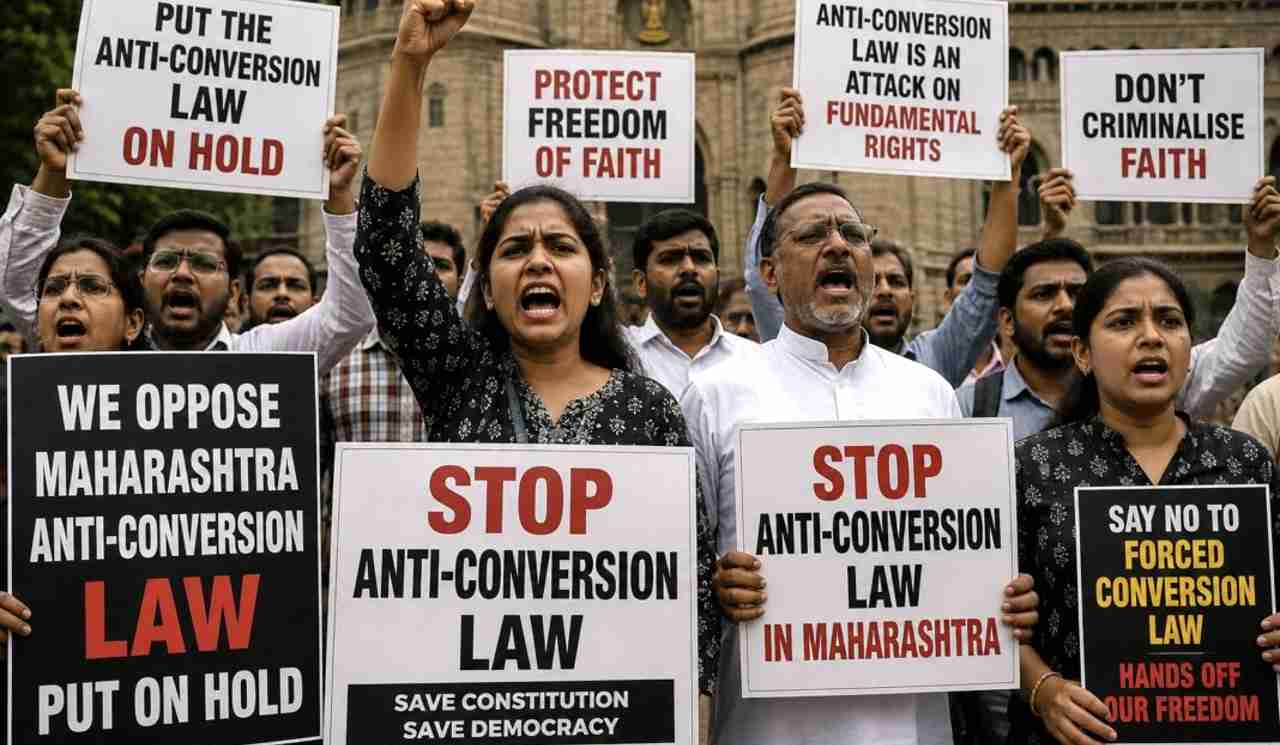
With the Modi government coming to power in 2014, India began to take a disturbing turn where Mob lynchings and open communal polarisation during festivals became increasingly common. While the communal offenders began enjoying the impunity and protection of those in power, in Jharkhand, the 2017 Global Investors Summit, attempted to weaken the CNT and SPT Acts. The repression of the Pathalgadi movement, attacks on minorities in the name of cow protection, and restrictions on religious freedom through anti-conversion laws together created an atmosphere of fascist terror in the state. At the same time, the central government was taking major steps towards fascism through the Citizenship Amendment Act (CAA), the three farm laws, and the crackdown on JNU. The entire state apparatus had been reshaped to crush dissent and popular movements. In this context, Stan Swamy's activities had become an unpardonable crime.
In the Vishrambag (Pune) FIR No. 4/2018 (the Bhima Koregaon case) 16 people were made accused with false allegation of having links with Maoists. This was the second FIR; the first, Pimpri FIR No. 2/2018, had named those who attacked Dalits who had gathered to observe Shaurya Diwas. The second FIR marked the first major experiment of the Sangh-corporate establishment where some of the country's best-known activists, writers, and movement leaders were falsely implicated, and the term "Urban Naxal" was widely propagated. All accused were charged under the Unlawful Activities (Prevention) Act (UAPA), and all of them were accused of conspiring to assassinate Narendra Modi.
The case was transferred from the Pune Police to the National Investigation Agency (NIA), and during the investigation, malware was used to install fabricated files on the accused persons' laptops, and forged evidence was created. It is well known that, with the help of sophisticated surveillance software, the Modi government has subjected bureaucrats, judges, journalists, and even Members of Parliament to surveillance. In this case, one of the accused, Surendra Gadling, remains in prison after nearly ten years, while some are under house arrest, and the others are out on bail under very stringent conditions.
Meanwhile, the government declared its plans to "eliminate" the Maoists, setting final deadlines for their eradication, and a continuing series of killings was carried out through staged encounters. Behind this state-backed violence, the destruction of forests, the repression of Adivasis, and the relentless expansion of corporate control continued unabated. Umar Khalid and Sharjeel Imam, many other student activists, political activists, and journalists, remain imprisoned.
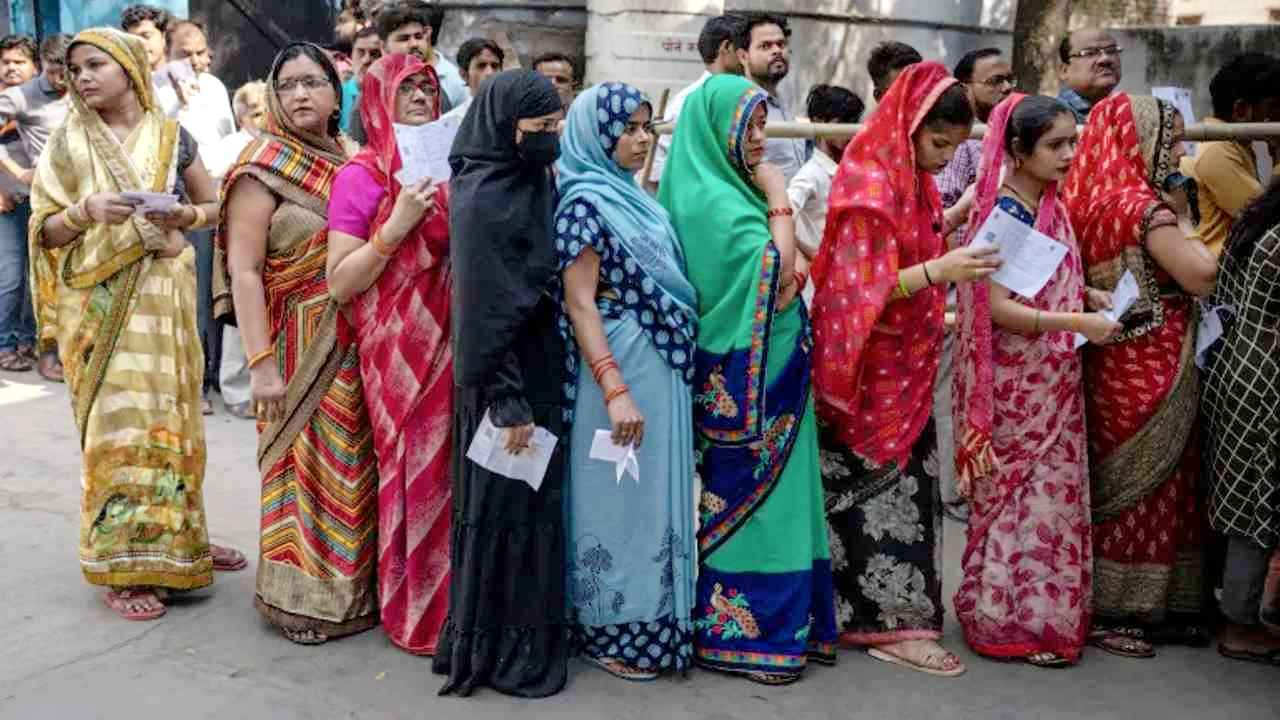
Major changes are being made to the laws, and the Constitution is under continued attack. The institutions like the Election Commission and the judiciary are being manipulated. And now even Members of Parliament are facing physical assaults by saffron goons. The Special Intensive Revision of the electoral rolls is pushing democracy to the margins.
The RSS may believe that it is closer than ever to realising the fascist state it envisioned a century ago. To that end, it is systematically weakening democratic institutions to bring them under its control and using fear and inducements to break political opposition. The Modi government has gone so far as to attack the very foundation of the Indian Republic, citizenship itself. Yet it has failed to grasp the depth of the roots of a free India, forged through the struggle against British colonial rule. The real strength of India, of "We, the People of India", lies in the power of mass movements on the streets.
Father Stan would have found solace in the fact that the people of this country are not silent spectators. As soon as the Labour Codes began to be implemented, a new generation of workers launched struggles in the industrial centres. In Barkagaon, the farmers' struggle against Adani's takeover continues. In Jharkhand and across the country, Adivasis are uniting against attempts to divide them into Sarna and Christian communities. Students and youth have also opened a new front against the central government. Standing firmly with these expanding and deepening movements against the fascists, and forging unity among them, would be the truest tribute to the memory of the martyred Father Stan Swamy.