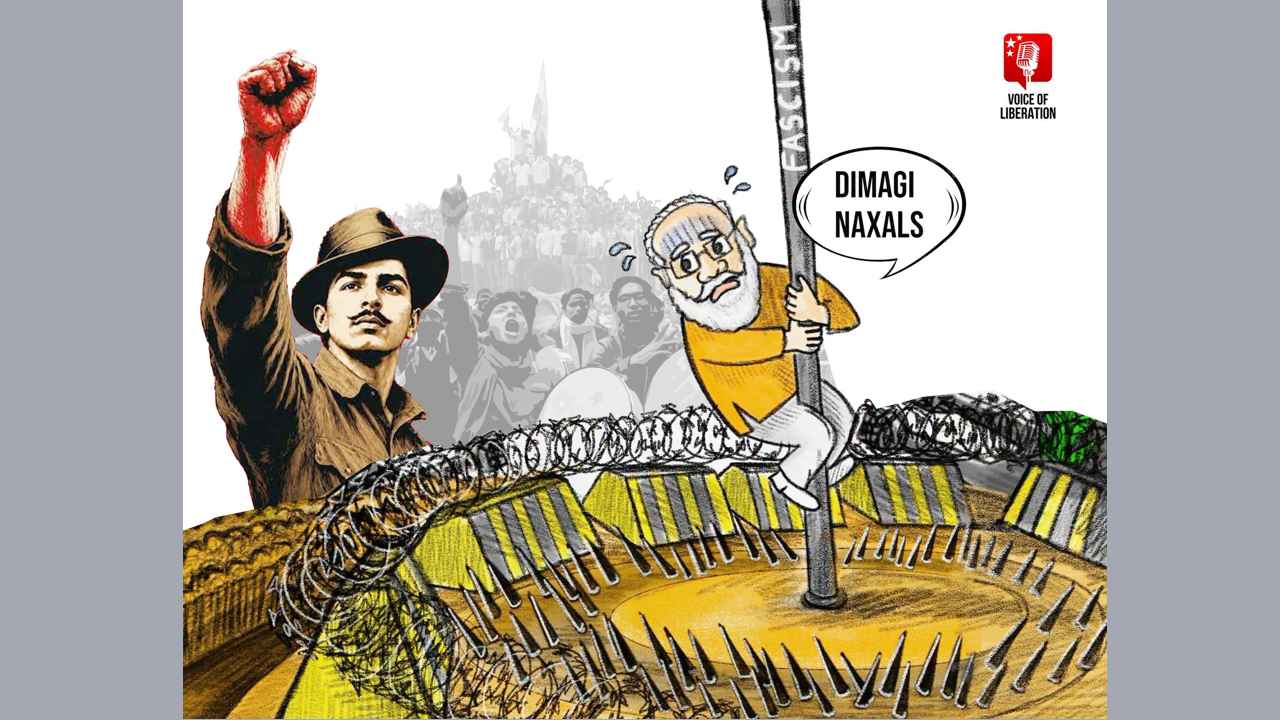
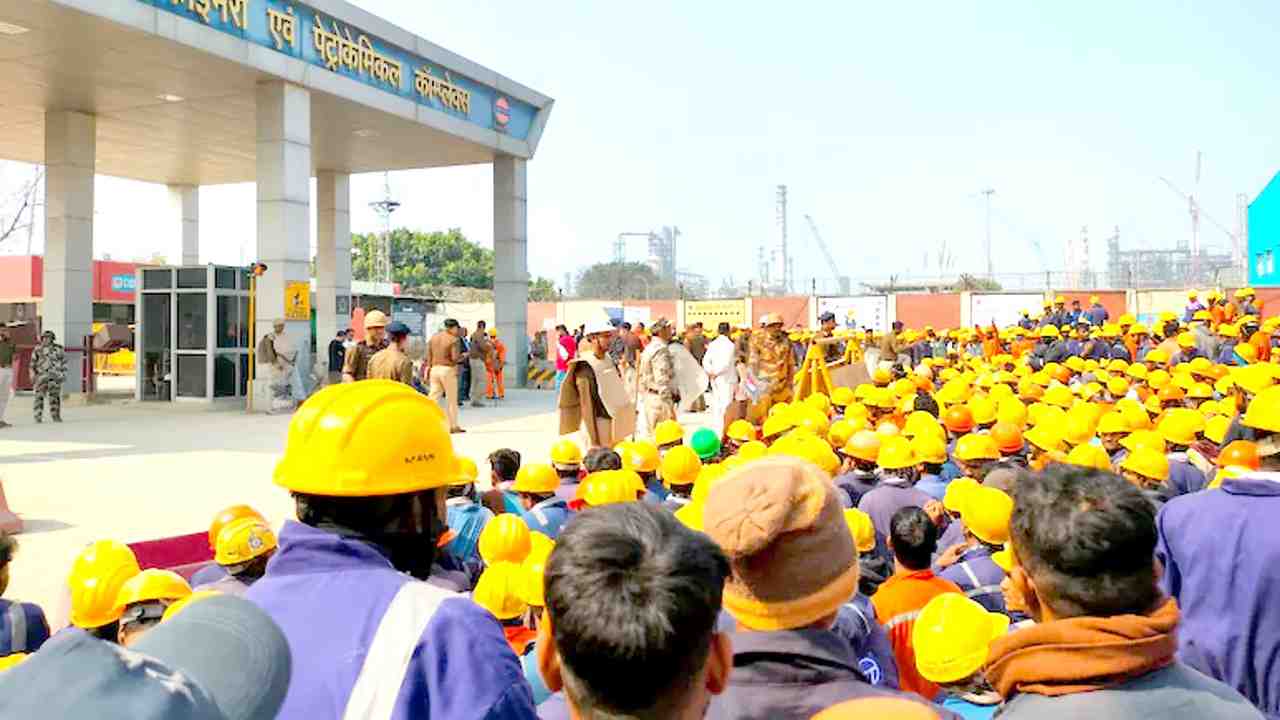
Meanwhile, sections of the mainstream media rushed to portray the workers’ protest as mere vandalism and stone-pelting. Yet the massive participation of workers spoke a truth far deeper than such distortions could conceal: the labouring bodies whose sweat sustains the refinery had reached the limit of what they could endure. Faced with relentless exploitation, they chose to rebel. And rebel they did.
Ground reports indicate that the immediate spark for the protest was an accident on 21 February, in which three workers were injured while working inside the refinery. Neither the IOCL management nor the concerned contractor cared to ensure proper medical care for the injured workers. This callous indifference ignited anger among workers who have long been subjected to intense exploitation and systematic violations of their legal rights.
The uprising at Panipat did not arise in isolation. It was preceded by protests by contractual workers at IOCL refineries in Guwahati and Barauni, and was followed by a powerful assertion of workers’ resistance by contractual workers at Larsen & Toubro’s Arcelor Mittal Nippon Steel India plant in Surat.
At the IOCL refinery in Guwahati, contractual workers have been organising themselves in large numbers, holding demonstrations and raising demands for basic workers’ rights: the enforcement of an eight-hour workday, wage increases, safe working conditions, occupational safety, and access to social security.
On 12 February, when workers across the country observed the All-India General Strike, the Guwahati workers organised a successful strike, demonstrating their growing unity and determination.
Since 2 February, workers at the IOCL refinery in Barauni, Bihar, have been engaged in sustained protest around the same set of demands. The Barauni workers have been demanding enforcement of the eight-hour workday, social security provisions such as PF and ESI, and basic working conditions including industrial safety, resting sheds, clean drinking water, hygienic toilets, and proper sanitation facilities. They are also confronting the devastating consequences of contractualization and sub-contractualization, which have become structural mechanisms for bypassing and violating workers’ rights.
The management initially assured the workers, on 2 February, that their demands would be addressed. But the situation took a repressive turn when union leader Lal Bau Rai was arrested by the police and suspended by the management on 8 February. This act only strengthened the workers’ resolve. They continued their boycott of work until their leader was released.
If the workers of Panipat drew inspiration from their fellow workers in Guwahati and Barauni, their own uprising has now become a spark for a wider rebellion in Surat. In the weeks that followed, industrial units across the country erupted in mass resistance against modern-day slavery and the exploitative nexus of management and state power. The IOCL Bottling Plant in Salem, Tamil Nadu stood in solidarity with the Panipat workers.
By the first half of March, powerful waves of protest spread across the Adani Thermal Power Plant in Korba, Chhattisgarh, Vedanta Power Plant in Singhitarai, Chhattisgarh, Buxar Thermal Power Plant in Bihar, Hindustan Zinc Limited in Chittorgarh, Rajasthan, IOCL Vadodara in Gujarat, and Obra Thermal Power Plant in Sonbhadra, Uttar Pradesh.
The struggle continues to expand, engulfing sites of exploitation across the country. In recent days, fresh waves of resistance have emerged at Adani Power Plant in Singrauli, Madhya Pradesh, NTPC Plant Shakti Nagar, Uttar Pradesh, UltraTech Cement Patratu, Jharkhand, UltraTech Cement Petnikota, Andhra Pradesh, Adani Power Plant Raigarh, Chhattisgarh, Tata Steel Plant Jamshedpur, Jharkhand, Tata Power Plant Mundra, Gujarat, and Jindal Steel and Power Plant Raigarh, Chhattisgarh.
The wave of workers’ resistance unfolding today must also be understood alongside the accelerating crisis of industrial safety in India, enabled by the systematic dilution of labour laws and the weakening of industrial compliance and inspection regimes under the Modi government. Across factories, chemical zones, fireworks units, and industrial corridors, explosions, fires, and toxic gas leaks have become disturbingly routine.
In recent months alone, a series of catastrophic incidents has exposed this structural collapse of safety enforcement. In Nagpur, a blast in an explosives unit claimed more than 20 lives. In Kakinada, a fireworks factory explosion killed nearly two dozen workers. In Rajasthan’s Bhiwadi industrial belt, a chemical factory fire killed seven workers. Earlier, in January 2026, a massive explosion in an industrial unit in Badlapur, Maharashtra, shook the entire industrial belt, exposing once again the fragility of safety systems under intensified deregulation.
A stark illustration of this systemic collapse was witnessed in the Palghar industrial belt of Maharashtra on 2 March, where a major gas leak at a chemical unit in the Tarapur MIDC region exposed thousands of residents and workers to toxic fumes. The leakage of hazardous gases, including sulfur-based compounds, spread panic across nearby industrial and residential zones, with people reporting severe eye irritation, breathing difficulties, and respiratory distress. The scale and intensity of the incident evoked grim memories of the Bhopal gas tragedy for many, yet both mainstream media attention and official response reflected a deeply negligent and muted attitude.
The intensifying tide of workers’ resistance unfolding today reflects the mounting anger of the toiling masses against the brutal exploitative policies of corporate power and a modern regime of wage slavery. In the name of “Ease of Doing Business,” the Modi government has advanced a system that openly privileges corporate profit and protection of corporate cronies, while systematically undermining and eroding the rights, safety, and very lives of workers. It is an order where labour is sacrificed to corporate accumulation, and where democratic and labour protections are steadily dismantled to serve the interests of capital. n
========

CPIML-AICCTU Teams Visit Panipat
A team from AICCTU, consisting of Comrades Abhishek and Vinod visited the protesting workers. Subsequently, on On March 08, 2026, another team consisting of Sudama Prasad (CPIML MP, Arrah), and comrades Prem Singh Gehlawat (CPIML, Haryana), Uma Raag (DTI), Akash Bhattacharya (AICCTU), Brijesh Gupta (AISA), and Aditya Krishna (AILAJ) met the workers and expressed their solidarity with their demands.
What the team found was not just a labour dispute in a narrow sense. It was a systematic, state-backed exploitation of migrant workers, conducted in one of South Asia’s largest integrated refineries. The Indian Oil Corporation Limited, a major public sector undertaking, operates 11 refineries across the country, including the one at Panipat. Yet even within such a public sector enterprise, the systematic violation of labour rights under the garb of contractualization has become the norm.
The upsurge at the Panipat refinery has starkly exposed how deeply the state apparatus is implicated in enabling the conditions of slavery for the workers. Within a PSU itself, thousands of contractual workers are forced to work without even the most basic protections guaranteed under existing labour laws.
The overwhelming majority of workers in the refinery is contractual workers. Estimates suggest that around 30,000 contractual workers are engaged in the refinery and its expansion projects, compared to only about 1,000 permanent workers.
The refinery is currently undergoing expansion, and a large number of construction workers have been deployed. Several private contractors have been awarded tenders for this work. Larsen & Toubro alone employs a substantial section of these workers, while many other service providers are also involved. Through this elaborate web of contractualization and sub-contractualization, the principal employer, IOCL, effectively insulates itself from accountability while workers’ rights are systematically violated.
The team found that workers are routinely made to work 12-hour shifts instead of the legally mandated 8 hours, while being paid only standard 8-hour wages. This amounts to a direct theft of wages, with overtime legally due at double rates being systematically denied. Workers are made to work 28 days a month, with no weekly offs or holidays, including on gazetted holidays.
Basic facilities inside the plant are absent. There is no clean drinking water, no toilets, and no canteen. Outside the plant, conditions are equally harsh. Most workers, migrants from Bihar, Uttar Pradesh, and other labour-supplying states, are housed in cramped 10×10 foot rooms, with four to five workers per room. Rent ranges between ₹3,000 and ₹5,000 per month, forcing workers to spend a significant share of their already low wages merely to secure basic shelter.
CISF personnel have turned the gate pass system into an additional mechanism of control and extraction. Police verification, renewals, and gate passes each involve informal costs borne by workers, extracted through a nexus between contractors, subcontractors, and administrative machinery. No bonus is paid to workers, and in most cases there is no ESIC coverage, leaving them completely unprotected in case of accidents or emergencies.
The immediate flashpoint of the struggle was a major industrial accident around 21 February, which led to the death of two workers and severe injury to a third worker, whose leg had to be amputated. The response of the management was widely reported by workers as callous and indifferent.
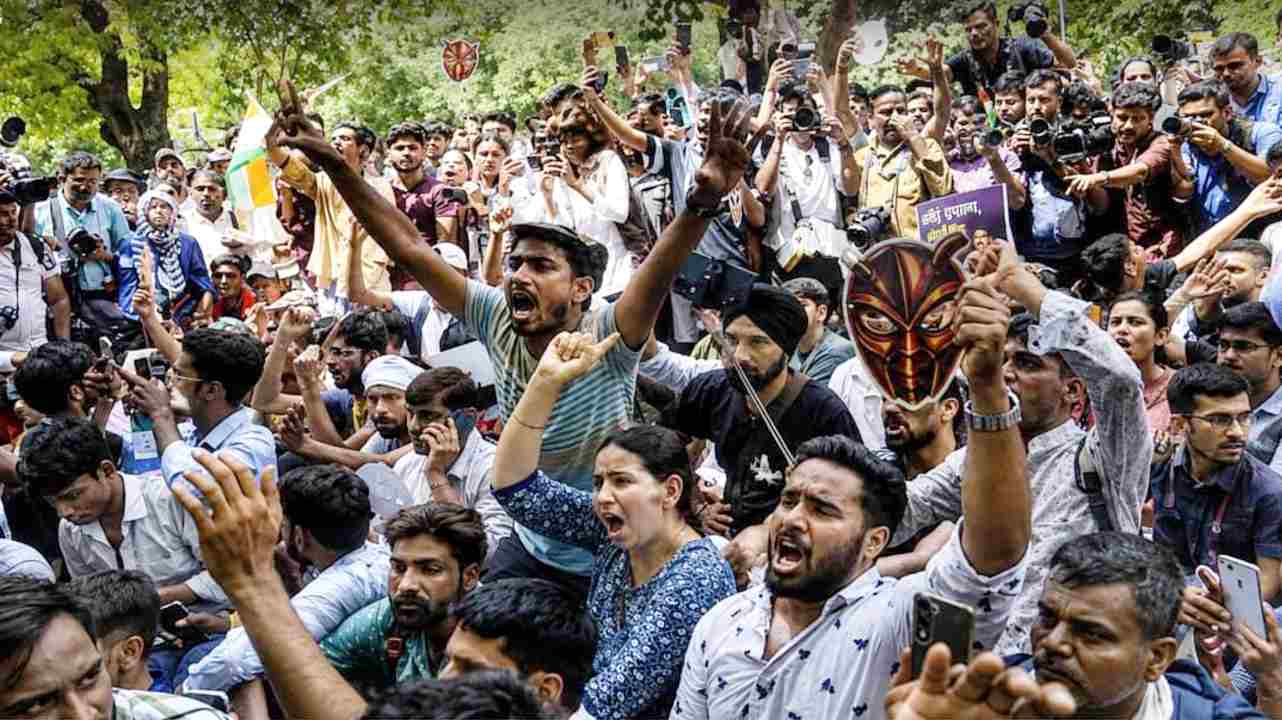
Soon after, on 23 February, thousands of workers gathered in protest, displaying remarkable unity and resilience despite heavy repression. When workers boycotted work and assembled in large numbers, the management refused dialogue and instead deployed the Central Industrial Security Force (CISF) to suppress the protest.
Lathi charges, tear gas shelling, and even firing in the air were used in an attempt to intimidate and disperse the workers. Reports also indicate the use of mobile network jammers inside the refinery to prevent information about the protest from spreading. In a further display of state–corporate bias, FIRs were filed against approximately 2,500 unnamed workers, while no action has been taken against management or contractors responsible for years of labour law violations and the fatal negligence that caused worker deaths and grievous injury.
Yet the workers refused to be cowed down. In the face of repression, they have remained steadfast, continuing their struggle with determination until their demands are met. The workers have placed forward a set of fundamental demands.
Key Demands of the Workers:
- Enforcement of the eight-hour workday: Workers are currently compelled to work 12 hours a day, and at times even 16 hours. Weekly holidays are routinely denied, and no overtime is paid for the extra hours of work.
- Timely payment of wages: Workers frequently go two to three months without receiving wages. They are demanding that wages be paid regularly, no later than the 7th of each month.
- Safe and dignified working conditions: The immediate trigger for the protest was the accident that injured three workers inside the refinery and the employer’s refusal to ensure medical care. Workers are demanding proper industrial safety measures, along with resting facilities, canteens, clean drinking water, and hygienic toilets.
- Access to social security: Workers report that there is no transparency regarding employer contributions to their PF accounts, and do not have access to ESI benefits. They are demanding full enforcement of these statutory rights.
- End to repression: The workers are demanding the immediate release of arrested workers and the withdrawal of all FIRs filed against them.
(With inputs from Abhishek and Aditya Krishna)