Some are genuinely fearing a conspiracy, an RSS-typed script, in the whole process of the making of film, the delay in release, the timing of the release on OTT and the taking down of the film. They suspect a deliberate move to achieve a polarising effect in an election bound state. Whatever is behind the scenes may be a subject of conjectures, but on the face of it the approach to the film is consistent with what the Modi government has been doing as a norm. When it comes to films, the Modi government has two clearly distinct interventions - films they promote and films they obstruct. The usual gestures for promotion are endorsements by famous faces, public calls to go watch, and tax rebates, as in case of ‘Kashmir Files’. The latter films suffer delays, cuts, boycotts and takedowns. What actually happens with the banned films seems almost immaterial to the highly regimented state machinery. Compare the current ban with that on the BBC documentary titled ‘India: the Modi Question’. The reasoning that wants to see an indirect promotion in the current ban on Satluj does not play out consistently for either of these two cases.
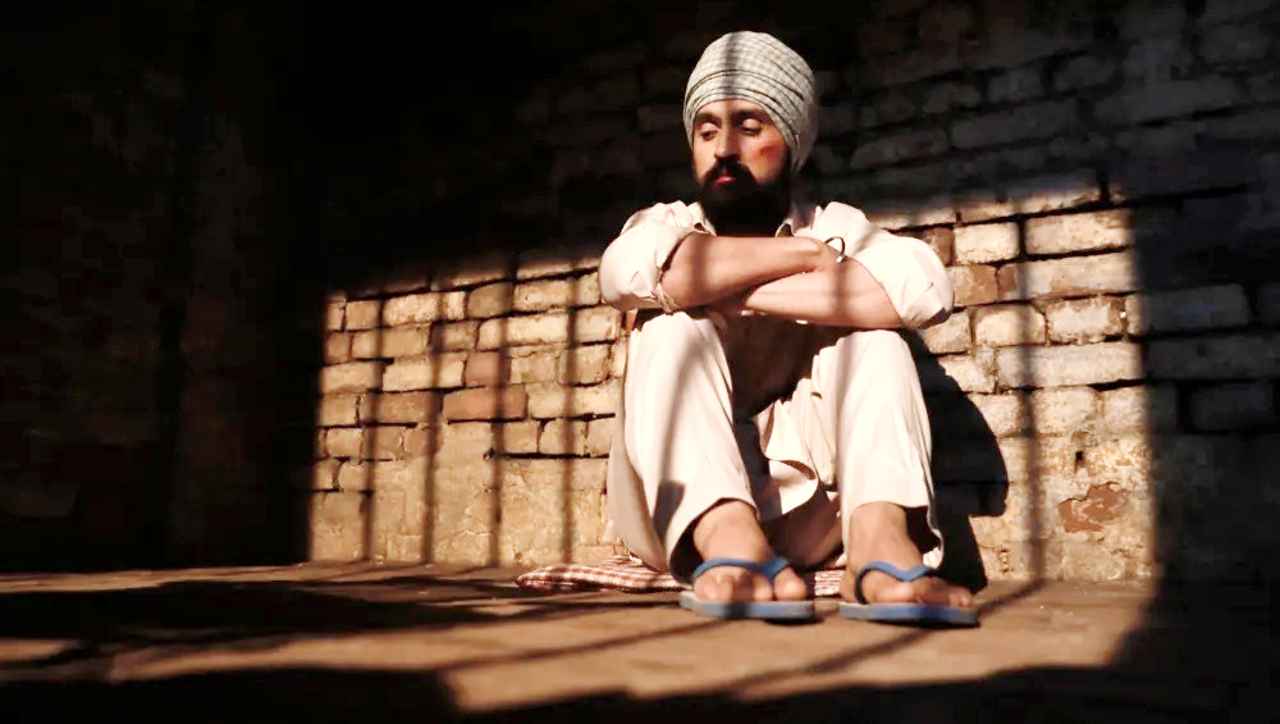
A senior journalist, who identifies himself as a relative of KPS Gill, anchors his critique of Satluj upon the allegedly overhyped human rights defending and fair investigating credentials of Bhai Khalra. He rates Satluj as a propaganda film, which is defending or projecting a half truth. The film, though, does not claim that Jaswant Khalra started his crusade within a formal human rights framework. He rather starts with a modest conviction - dignity in death, for all. Another of his triggers is a constant discrepancy in the records of the dead, mentioning them as ‘unclaimed’ despite recording detailed information including names, father’s names and addresses of the deceased. He asserts a minimal conclusion - it signals a procedural lapse, a haste and a conspiracy behind dumping these bodies, and therefore, warrants investigation. The path he chose has four components - one, flag the concern in the public domain, two, organise the victim families, three, seek a legal intervention through the courts, by building a case that may stand judicial scrutiny and four, not to bow down to any pressure or threat. All this suffices for someone to be considered a human rights protagonist. Concluding anything over whether or not he was successful, whether or not he proved to be right, whether or not he remained consistent throughout - would have required him to live. Else, it warrants a rigorous investigation, with or without him.
For the BJP, the Satluj takedown episode does not seem to merit an official well-formed party stance. Diametrically opposite stances have been taken by their party leaders including the state party chief, a minister of state and a senior leader. BJP leader Ravneet Bittu has challenged the veracity of facts. He has pointed to “selective portrayal of Punjab’s darkest chapter” in the movie. Bittu questions “Why are the massacres of innocent Hindus, bus passengers, shopkeepers, government employees, labourers and ordinary citizens brutally killed by terrorists not depicted with the same intensity?” This line of argument is a well-known template powered by whataboutery. Senior BJP leader and former chairman of the National Minorities Commission Iqbal Singh Lalpura, on the other hand, has asked Bittu to avoid questioning the numbers of dead mentioned in the film. “When Jaswant Khalra spoke about the disappearances of 25,000 people, he gave a message. The claim was verified by the National Human Rights Commission. If Bittu Sahib wants the data, he can seek it from NHRC (National Human Rights Commission)," he said.
Bittu’s harsh criticism of Daljit Dosanjh, the lead actor, as well as of the film is countered by citing the legacy he inherits, referring to his grandfather, the then CM of Punjab, assassinated at the hands of militants. The BJP may want people to be distracted by this jugglery of statements issued by its leaders and overlook the fact that it is the Modi Government’s Information and Broadcasting Ministry which has ordered the take down of Satluj from the OTT platform citing a threat to national security.
Congress is the only political party who, being at helm of the government during the period covered by the film, can expect a backlash from the Sikh electorate. Congress leaders and government have a direct visible presence in Satluj. Under scrutiny is the role of the Congress government and police in the crisis of the 1980s and 90s. While the high-handedness with innocent Sikh youth is a common concern, still there does exist a large section in Punjab which considers the state monopoly over violence, and the way it was exercised, as a necessity. Congress championed the support of this segment. Their view is echoed in the film at a point where, after an episode of cold blooded murder of a family by SSP Sugga, DGP Bitta (changed name of KPS Gill) claims in front of a journalist “I agree that asking questions is a right of every citizen, but you must also remember, that if there is any democracy left, it is only because of us”. The argument clearly rests upon a false binary - either bear the militancy or accept a limited democracy within the confines of a police state. The people of Punjab suffered from both, simultaneously. The indispensability of democracy, dialogue, justice and progress is the lesson which even Congress must have learnt from the horrors of a decade of Modi rule. Does the Congress still endorse KPS Gill’s logic?
Ask a random viewer after watching Satluj - what are the top keywords associated with the film? What is the one topic that the film discusses through Bhai Khalra? The most expected answer is - ‘Human Rights’. A broader inference will lead to a second theme - ‘state violence’ or ‘the abuse of power'. Courage, fear, brutality, corruption, political interests etc. may form the third circle in this word cloud. One may contest any facts about Bhai Jaswant Singh Khalra’s life, about numbers of disappearances and extrajudicial killings, but one cannot miss the overwhelming impact of the film as a story of a disrupted but imaginative investigation into the scale of extrajudicial killings through municipal records of wood used to burn them. To read from it a mere quantitative statement about the numbers of extrajudicial killings that took place in Punjab, amounts to missing the point. The film rather problematises the abuse of power and the curbing of democracy by muzzling the press, political activity and judicial procedures in dealing with a political issue, and makes a qualitative statement, instead.
Satluj has takeaways beyond what happened then in Punjab. Enthusiastic debates over the veracity of factoids, over partial representations or mis-representations only serve to downplay or bypass these qualitative as well as operative takeaways. The film asks ‘what if?’ questions. What if a government is replaced with a police state? What if the discourse of politics is polarised along communal lines? What if the political opposition is reduced to zero? What if the judiciary surrenders the principles of justice and starts looking at the acts of persons through the eyes of policemen? What if the public health infrastructure and the doctors are dominated by the police? What if the courts fail to protect the life and liberty of witnesses? And looking at today’s India, what if all this happens once and for all?
Satluj is being screened among people who are, almost daily, witnessing fake encounters of youngsters accused of involvement in crime or mafia gangs, or of carrying out crimes at the behest of their alleged cross-border handlers, in Punjab, and JCB-led and police-guarded demolition campaigns almost all over India. The institutions essential to democracy are suffering credibility losses to the extent that the Modi government can no longer be seen as a passing phase but has engineered a fascist transformation of the state apparatus which has built pressure to conform even on the non-BJP governments. The very section of people which was earlier an advocate of giving exceptional powers to the police to counter the insurgents, now may want the same against the gangsters, drug mafia and those involved in increasing incidents invoking memories of Sikh militancy. The BJP wants to catch the imagination of this section when Amit Shah promises a strong and decisive government at the BJP’s recent Moga rally. On the other hand there does exist a vast mass of people who want peace and order through democratic strengthening and progress. They are the ones who need a powerful voice and articulation. Both these segments draw opposite lessons from the film.
The River Satluj, in a literal as well as a metaphorical sense, marks the continuity between the late night hurried cremation of Bhagat Singh, Rajguru and Sukhdev on its banks, and the unknown dead bodies dumped by the Punjab police in the 80s and 90s. Its robust flow in silence wonders - will it have to carry yet more bodies? This depends only upon what happens on its banks. If the people of Punjab focus on Bhai Khalra’s story as only a piece of historic injustice, then surely, the film and the episode surrounding it, may turn out to be a red herring, in the sense that worse is already happening all around. On the other hand, if we let the deep sense of injustice and a sturdy resolve to fight it in all its forms sink in, then look around in the present world and act, we will find the film’s message of defending human rights and a dire need for institutional checks and balances to be a well-placed anchor for the perfect narrative to bank upon while fighting for historic justice as well as for a just future. Let the Satluj flow quiet and free.