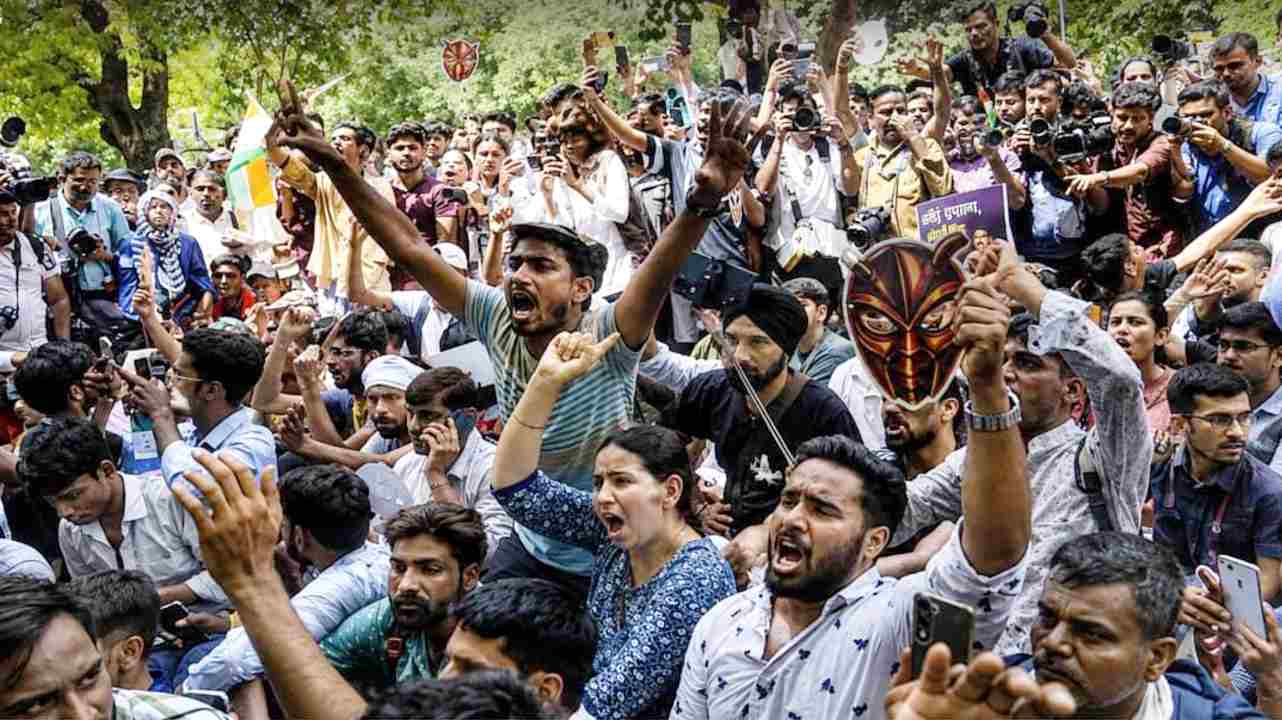
Booth Level Officers (BLOs) sensed this much earlier. The pressure on them was the most severe—and they were the first to resist. Their protest soon spilled over into the wider public sphere. By the third week of January, public anger had reached a boiling point. Public resentment was no longer directed only at the Election Commission of India (ECI); it increasingly struck at the BJP leadership itself.
Election Commission of Harassment
For years, BJP leaders and Union ministers have repeatedly threatened that “infiltrators,” “Rohingyas,” and “fake voters” in West Bengal would be identified and pushed into Bangladesh. The announcement of SIR immediately triggered widespread fear. Many people, particularly among the poor and marginalised, lack documents required as proof. The BJP’s persistent rhetoric of expulsion inevitably created panic. These fears were not unfounded. Bengali migrant workers have already been detained in other states and pushed across the border by the Union Home Ministry.
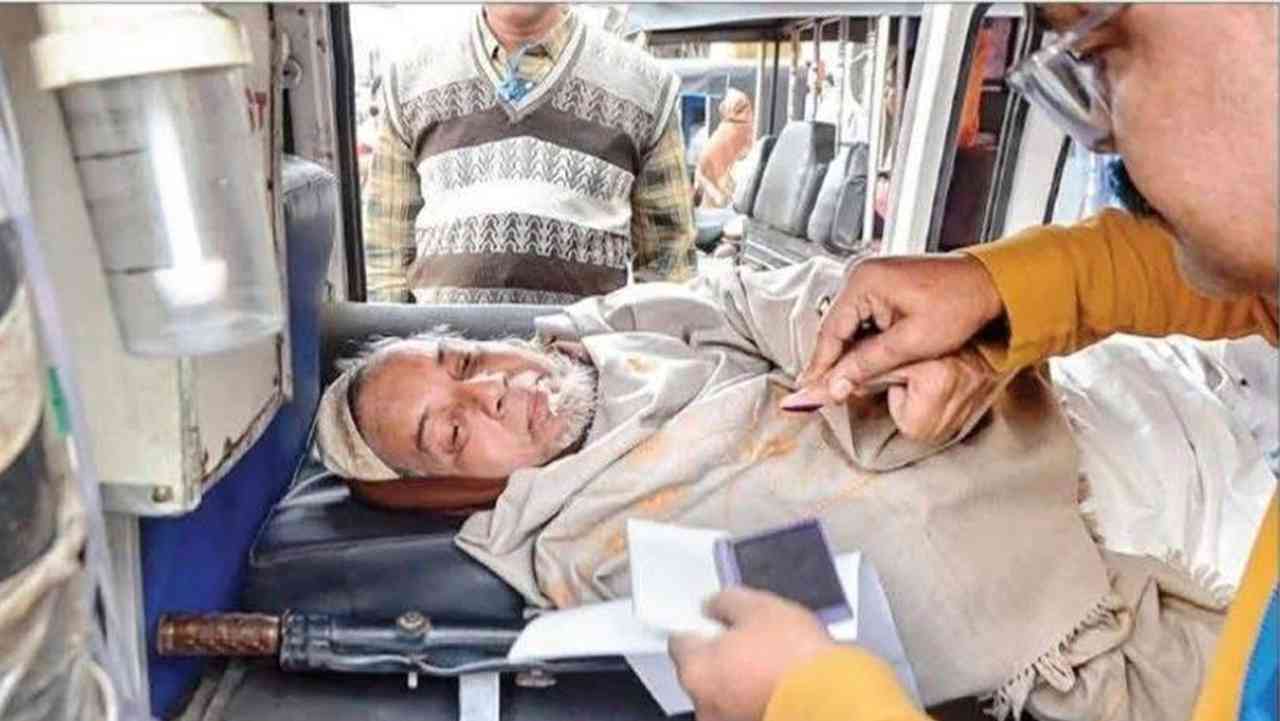
The anxiety was therefore existential: would losing one’s name from the voter list mean losing citizenship itself? Across Bengal’s villages and towns, people began to mentally collapse under this uncertainty. Reports emerged of elderly people suffering fatal heart attacks, and of suicides driven by fear and humiliation. Suspicion and anger steadily accumulated.
In the initial phase, the ECI had clearly stated that those whose names appeared in the 2002 electoral rolls, or who could establish a link with them, would not be required to submit supportive documents. This assurance brought temporary relief. Until the publication of the draft rolls, the situation remained relatively calm. Yet a series of contradictory decisions by the Commission gradually eroded public trust.
What emerged instead was a lived experience of arbitrary and cruel harassment. Many people who stay away from home for work rushed back just to fill out the forms. Many people visited BLOs multiple times. Everyone submitted all required information. Yet, on the basis of an undefined and weaponised category called “logical discrepancy,” citizens were forced into hearings for the most trivial inconsistencies. Hearings became sites of humiliation rather than redress.
Even the Commission’s own list of acceptable documents has been altered mid-process. For large sections of the population, the Election Commission no longer appears as an impartial constitutional body, but as a commission of persecution 'Nirjatan Commission'. This targeting has been particularly stark in the case of Muslims, whose citizenship and voting rights appear not as inherent rights but as privileges that must be continuously proven. Members of the Namasudra community have also begun to recognise, through this process, the long history of deception surrounding promises of citizenship and inclusion. The hollowness of assurances made under the CAA stands exposed through the everyday harassment of SIR. Protests have already erupted from Matua-dominated regions.
The undemocratic SIR process and the lies of the ECI stand clearly exposed, and the entire exercise has become a collective social experience marked by fear, humiliation, and existential insecurity.
Systematic Humiliation of Booth Level Officers
BLOs have witnessed the process from the inside and have borne its heaviest burdens. Initially told that they were merely couriers tasked with distributing and collecting forms, they were soon subjected to extraordinary pressure. They were informed that this was not routine work but an urgent and special “mission.” Within impossibly short deadlines, they were expected to ensure correct data collection from vast numbers of households and upload it onto an app. No additional remuneration or institutional protection was provided. Schoolteachers, health workers, and panchayat staff were saddled with double workloads.
Since the Commission had initially stated that no documents were required where a 2002 linkage existed, many BLOs conducted verifications accordingly. But the Commission later reversed its stance. Previously approved cases were suddenly labelled suspicious. New oral and written instructions declared that even 2002-linked cases might require fresh documentation, rendering earlier verification meaningless. The anger of citizens fell squarely on BLOs.
This was compounded by flawed AI-based matching systems that failed to account for ordinary variations in spelling, age, names of parents, or village names. Instead of acknowledging technological failures, the Commission shifted blame onto BLOs, accusing them of negligence. Millions of forms were returned. Even after BLOs resubmitted forms under written responsibility, the Commission ruled that these would also be subjected to hearings—nullifying their accountability while retaining the option to hold them culpable in the future.
BLOs have no voice in hearings. They cannot defend their own verification work. Decisions lie entirely with EROs, DEOs, and observers. Responsibility without rights. The deployment of observers from outside the state reinforces the presumption that local officials are politically suspect, amounting to a direct assault on their professional dignity. A barrage of sudden circulars, WhatsApp instructions, oral orders, cancelled directives, revised app formats, and changing procedures has created procedural chaos. The humiliation of BLOs has merged seamlessly with the anger of the people.
An Assault on India's Federal Structure
SIR has also functioned as a direct attack on West Bengal’s administrative autonomy. Pressure was exerted on BDOs, SDOs, and District Magistrates—officials who, though constitutionally placed under the Election Commission during elections, remain employees of the state government. The crisis reached such proportions that the Chief Minister publicly urged officials not to succumb to fear.
From the outset, SIR was not a neutral administrative exercise but a centralised attempt to seize control over the state’s electoral machinery. While the Commission claimed that EROs had final authority and that even the Election Commissioner could not override their decisions, this proved illusory. In practice, EROs were reduced to forwarding cases to DEOs, where fresh “verification” began. Even DEO decisions were not final, subjected instead to scrutiny by roll observers, special observers, and micro-observers brought in from outside the state—many closely aligned with central administrative networks.
This layered override structure makes West Bengal’s SIR distinct from that in other states. Its stated rationale is to prevent the elected state government from “using” its own administration—an assumption of bad faith that effectively renders the state government irrelevant. Ground-level verification by BLOs is similarly nullified.
West Bengal has thus become a laboratory where the Centre demonstrates how the Election Commission’s institutional architecture can be used to subsume a state’s electoral process entirely. In the process, India’s federal structure is weakened, and the right to vote is transformed from a constitutional guarantee into a conditional privilege dependent on central approval.
A Political and Cultural Assault on Bengal
Underlying this process is a deeper political and cultural attack on Bengal itself. In BJP discourse, “Bengali” increasingly becomes synonymous with suspicion, infiltration, and illegitimacy. Linguistic differences, spelling variations, names, and pronunciations are criminalised through AI systems. Bengali language and identity themselves become grounds for punishment.
The symbolic violence of this assault was laid bare when notices were reportedly issued to Nobel laureate Amartya Sen—someone who has never renounced Indian citizenship. Notices to other eminent figures have also surfaced. While the Commission presents this as evidence of neutrality—“no one is exempt”—the underlying message is unmistakable: no one is safe. If Amartya Sen’s citizenship and voting rights can be questioned, what security remains for ordinary citizens?
Artificial Intelligence (AI) here is not a neutral tool. It has become an instrument of intimidation. Minor discrepancies in documents are converted into grounds to question identity, citizenship, and voting rights. Even with documents in hand, people are unable to prove that they are who they claim to be. This technological violence has rendered the relationship between citizen and state deeply inhuman.
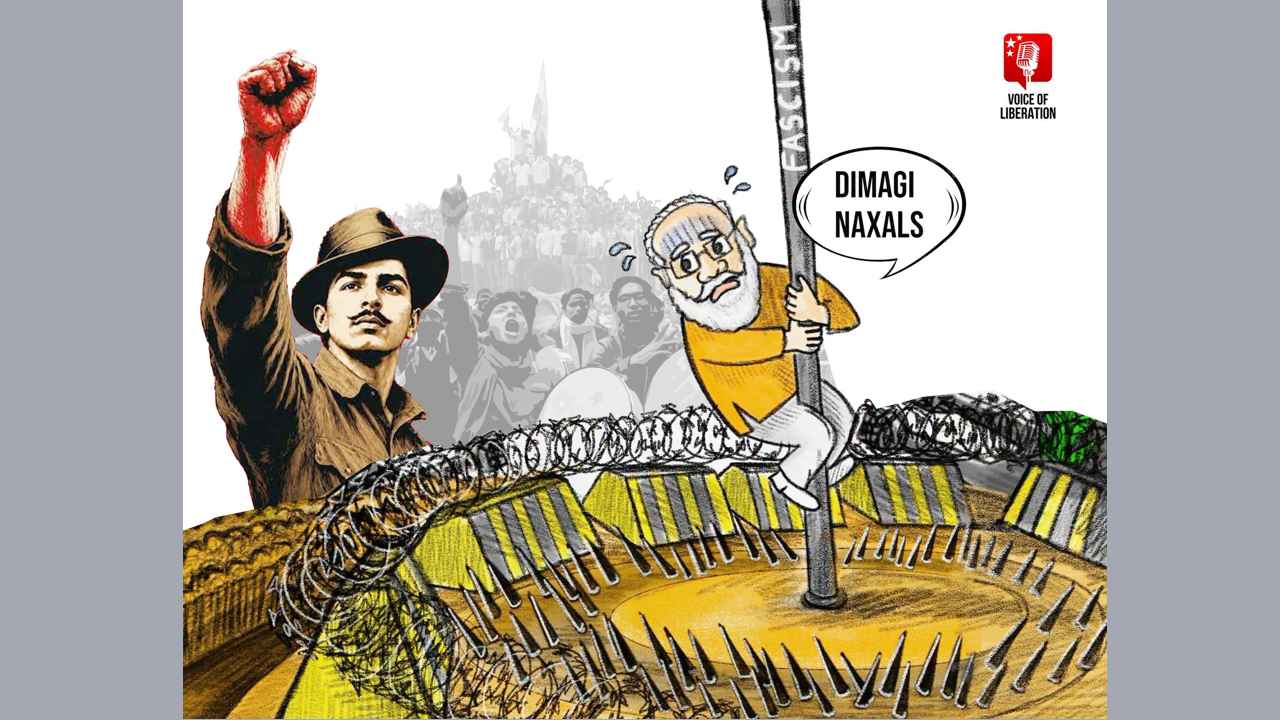
At its core lies Hindutva politics, rooted in Brahmanical hierarchies sustained by fear, surveillance, and control. Citizens are reduced to suspect profiles. The state ceases to be a protector and becomes a punisher. Technology is transformed from an instrument of progress into a weapon of domination. These are unmistakable features of an authoritarian, fascist project—now being tested in West Bengal through the machinery of electoral revision.