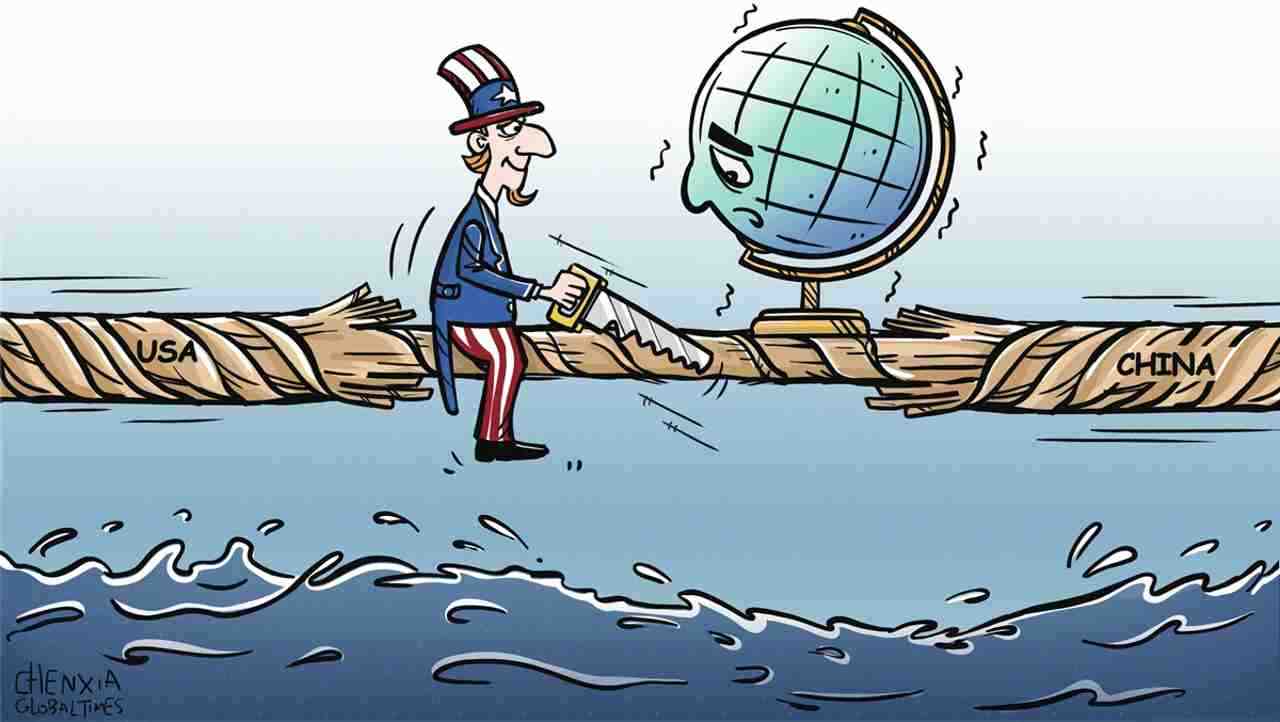
In 2026, the genocide in Gaza continues and the war on Lebanon has escalated. US/NATO’s proxy war has led to the hundreds of thousands of deaths in Ukraine and Russia. The war on Iran, led by the US and Israel, is heading towards a major setback for the US. Are these merely the actions of a narcissistic and authoritarian person or a manifestation of a more systemic and deeper crisis impacting US imperialism. This article briefly examines the economic dimensions of this crisis and the desperate attempts to resolve it.
Historical Background: From 1776 to World War Two
The US was established as a settler colonial state when the thirteen original colonies declared independence from the British empire. Even after independence the genocide of Native Americans and slavery continued. The westward expansion of the newly independent colonies was done through annexations and wars, for example, to name a few, the Louisiana purchase of 1803, the 1821 ceding of Oregon Country, and the annexation of Texas that led to the Mexican American war of 1845, and the control of Panama Canal zone from 1903 to 1979. The Monroe doctrine (1823) was part of the US power projection starting in the 1800s when many Spanish colonies were gaining independence. The current imperial policy, often called the Trump corollary to the Monroe doctrine or the “Donroe doctrine,” builds on this long history. The kidnapping of President Maduro of Venezuela, the plan for Greenland annexation, and the Panama Canal acquisition were justified as part of this doctrine.
World War II was fought between the European colonial powers with the Soviet Union and China playing a key role in defeating fascism. Millions of soldiers from the colonized countries were forced to join the colonial armies. The war resulted in the massive destruction of the European colonial powers and their industrial base. The US emerged from the war with minimal damage to its infrastructure and industrial base. As the US emerged as an uncontested imperial power, which did not permanently occupy the countries except for a few exceptions, a set of institutions were established to ensure global hegemony. Some key institutions for economic hegemony were the International Monetary Fund (1944), World Bank (1944), and World Trade Organization (1995; GATT - 1948) that worked in concert with the North Atlantic Treaty Organization (1949) and United Nations Security Council (1945).
The Dollar System
After the Bretton Woods system was set up in 1944, the US dollar became the global reserve currency and is the most widely used currency for international trade. The high global demand for dollars is considered an “exorbitant privilege” for the US. It allows the country to borrow money at a lower cost and use the currency as a tool of hegemony. The petrodollar system was established in the 1970s after the end of the gold standard. Oil-exporting countries agreed to sell oil only in US dollars, boosting the dollar’s global reserve status. For example, Saudi Arabian oil revenue was reinvested in US government debt, enabling ongoing US deficit spending. Even though most fossil fuel exporting countries export their products in dollars, the monopoly has been shaken. Saudi Arabia, the world’s largest exporter of petroleum, now accepts other currencies. The US financial sanctions, used extensively against countries, have encouraged transactions in other currencies, raising fears of “de-dollarization.” BRICS nations are also experimenting with a new financial infrastructure to challenge the dollar’s global dominance.
Neo-Liberal Capitalism, Imperialism and the US
The US share of global production was 50% in 1950 after World War II but had dropped to 25% by the 1980s. After several decades of neo-liberal economic policies, the US share of global production has fallen to 12%. As a percentage of Gross Domestic Product (GDP), US manufacturing has fallen from 21-25% (1950s) to about 10% (2024). While the US is still the world's largest economy in terms of nominal GDP, it has slipped to the second-largest in terms of purchasing power parity (PPP) behind China.
After World War II, the US routinely engaged in balanced trade or ran surpluses. It had a large current account surplus immediately after the war but by the 1970s it had a chronic deficit and is today the world’s most indebted country. The US has had a trade deficit with the rest of the world for nearly 50 years. While the US GDP is over $30 trillion (2025), the US debt-to-GDP ratio has gone up to 121%. A World Bank (WB) study predicted that countries with a debt-to-GDP ratio above 77% for a prolonged period were likely to experience significant slowdowns in economic growth. The total government debt will increase by another $3.8 trillion after the Trump administration passed a major tax cut for the rich.
Current Economic Crisis
The great financial crisis (GFC) of 2007-09, started in the US with mortgage-backed securities. From January 2007 to September 2009, the large US and European banks lost more than $1 trillion from bad loans and other assets. The financialization of the economy and the inflation of asset price bubbles are key aspects of neo-liberal economic policies. These economic policies have been in place for decades and have benefited the capitalist class. One hundred and fifty billionaire families spent nearly $2 billion to influence the 2024 US elections. No wonder, in the second Trump administration, the top officials encompass thirteen billionaires with a total net worth of $460 billion. While three multibillionaires, in 2022, owned more wealth than the bottom half of the US population (160 million). The top 1% get around 45% of all new income.
While, in 2011, the average real wage of a male American worker was marginally lower than in 1968. It is estimated that about 36 million people lived below the poverty line in 2024. The neo-liberal economic policies have led to the de-industrialization of large parts of the US economy. Globally, 266 million people experienced high levels of acute food insecurity in 47 countries. To defend this brutally unequal system, the US maintains more than 750 military bases around the world. To pay for the major tax cuts for the rich and finance the $1.5 trillion defense budget, US social services such as Medicare and Social Security are likely to see major cuts.
Some countries such as China were not as badly impacted by GFC. China has emerged as a peer competitor of the US. The United Nations Industrial Development Organization (UNIDO) estimates that Chinese industrial production (as a % of global production) will rise from 6% (2000) to 45% (2030). During the same period, the US’s industrial production (as a % of global production) will decrease from 25% to 11%. No wonder the Obama administration started the “Pivot to Asia” after the global financial crisis. It was a significant shift in the US foreign policy as it shifted the country's focus away from West Asia and Europe.
Changing Global Economic Power Dynamics
The contemporary global order has undergone a significant transformation over the last couple of decades, driven by shifting economic power in the global capitalist world order, intensifying geopolitical competition, and the growing aspirations of emerging economies to reshape international institutions. While the United States continues to dominate the global financial system, China's rapid economic rise and the expanding influence of BRICS have contributed to an increasingly multipolar world. Yet, despite these changes, the transition away from a U.S.-led international order remains incomplete, as economic interdependence coexists with strategic rivalry and significant institutional constraints. A recent example of these dynamics was Donald Trump's 2026 visit to China. Although the visit resulted in China agreeing to purchase 200 Boeing aircraft, the United States had reportedly expected an agreement closer to 500 aircraft. More importantly, the visit failed to resolve long-standing structural trade disputes or reduce tariffs between the world's two largest economies. China also maintained restrictions on exports of rare-earth minerals as it produces approximately 90% of the global supply. These minerals are indispensable for manufacturing semiconductors, electric vehicles, aerospace components, wind turbines, and advanced defense technologies, giving Beijing substantial leverage over critical global supply chains. Geopolitical disagreements also remained unresolved. China declined to support U.S.-led pressure on Iran, instead advocating negotiations and ceasefire efforts, while simultaneously reaffirming Taiwan as a core national interest and criticizing continued American military support for the island.
These developments reflect broader changes in the global economy. Between 1995 and 2025, the United States' share of global nominal GDP fluctuated between 23–31%, while China's share increased dramatically from approximately 2–3% to around 18%, making it the world's second-largest economy. Similarly, the combined share of BRICS economies in global GDP expanded from 10% in 1995 to approximately 41% by 2025, overtaking the United States, whose share stood at roughly 26% during the same period. Despite this remarkable redistribution of productive capacity, the architecture of international finance has changed much more slowly. The U.S. dollar still accounts for approximately 55–60% of global foreign exchange reserves and is involved in nearly 90% of all foreign exchange transactions worldwide, underscoring the continuing centrality of the American financial system despite declining relative economic dominance.
While nearly all conventional measures of economic progress within the capitalist framework highlight China’s extraordinary economic achievements, these gains have also been accompanied by significant domestic contradictions, highlighting the foundational problems of the capitalist economy. On the one hand, over the past four decades, the country has lifted more than 800 million people out of poverty, built globally competitive manufacturing and technology sectors, and emerged as a leader in renewable energy, electric vehicles, and digital infrastructure. On the other hand, this growth model now faces mounting pressures, including slowing GDP growth, industrial overcapacity, a prolonged real-estate crisis, rising youth unemployment, and increasing wealth inequality. Interestingly enough, these challenges have not translated into declining public support for the state and Chinese Communist Party. Many young Chinese remain strongly patriotic despite being acutely aware of domestic problems. This apparent paradox reflects a combination of nationalism and anti-imperialist sentiment, reinforced by perceptions that China's developmental achievements compare favorably with growing political polarization and economic instability in many Western countries.
The rise of BRICS represents another important dimension of the changing international order. Originally proposed by Goldman Sachs economist Jim O'Neill in 2001, BRICS evolved from an investment concept into a political coalition following its first summit in 2009, held in the aftermath of the global financial crisis. Since then, the grouping has expanded its agenda beyond calls for reforming global financial institutions to establishing the New Development Bank, promoting greater use of local currencies in international trade, and reducing dependence on the U.S. dollar.
The 2023 Johannesburg Summit marked a major expansion of BRICS by inviting countries such as Egypt, Ethiopia, Iran, and the United Arab Emirates, while the 2024 Kazan Summit emphasized sanctions-resilient financial infrastructure and reforms to the International Monetary Fund, the World Bank, and the World Trade Organization. Despite these ambitions, BRICS continues to face important structural limitations. The grouping lacks a common currency, coordinated foreign exchange mechanisms, integrated financial markets, or unified security objectives. Its members possess diverse political systems, economic priorities, and often conflicting geopolitical interests.
Furthermore, simply replacing the U.S. dollar with another reserve currency would not necessarily eliminate the deeper structural inequalities embedded within the global financial system. More fundamental reforms may require alternative trading arrangements based on bilateral settlement systems, long-term clearing mechanisms, or regional financial institutions that reduce dependence on global capital markets. These contradictions became particularly evident during preparations for the 2026 BRICS ministerial meeting in New Delhi, where disagreements over the conflict involving Iran and tensions in the Strait of Hormuz prevented member states from issuing a joint communiqué. India instead released only a Chair's Statement to preserve diplomatic continuity. Such divisions demonstrate that although economic multipolarity is becoming an increasingly prominent feature of the global economy, geopolitical fragmentation and divergent national interests, and the internal laws of Capitalist world order continue to constrain the emergence of BRICS as a coherent strategic bloc. Consequently, the international system appears to be evolving not toward the replacement of one hegemon by another, but toward a more complex world characterized by multiple centres of economic power operating within an international financial and security architecture that remains substantially shaped by the interests of US imperialism and global capitalism.