This article will not go over the science of air pollution again, or list the solutions that are already in front of us. Instead, we want to express our dismay that the party in power no longer seems to care about its failure to govern, even when that failure is a matter of life and death for millions of citizens. Before we turn to that failure, let us look at some key facts about the ongoing crisis. They are even more troubling because they show how the ruling party’s own right-wing ecosystem is actively making the problem worse, for the sake of petty majoritarian appeasement:
- The government knew pollution would peak after Diwali. Despite controlling the Centre, the state and the municipal corporation, it took no preventive action. Sprinklers and GRAP measures were all reactions to spikes, not plans to prevent them.
- The government knew from last year that green crackers did not prevent the post-Diwali spike, and that the rules were widely ignored. It still chose not to oppose the Supreme Court’s ruling allowing them.
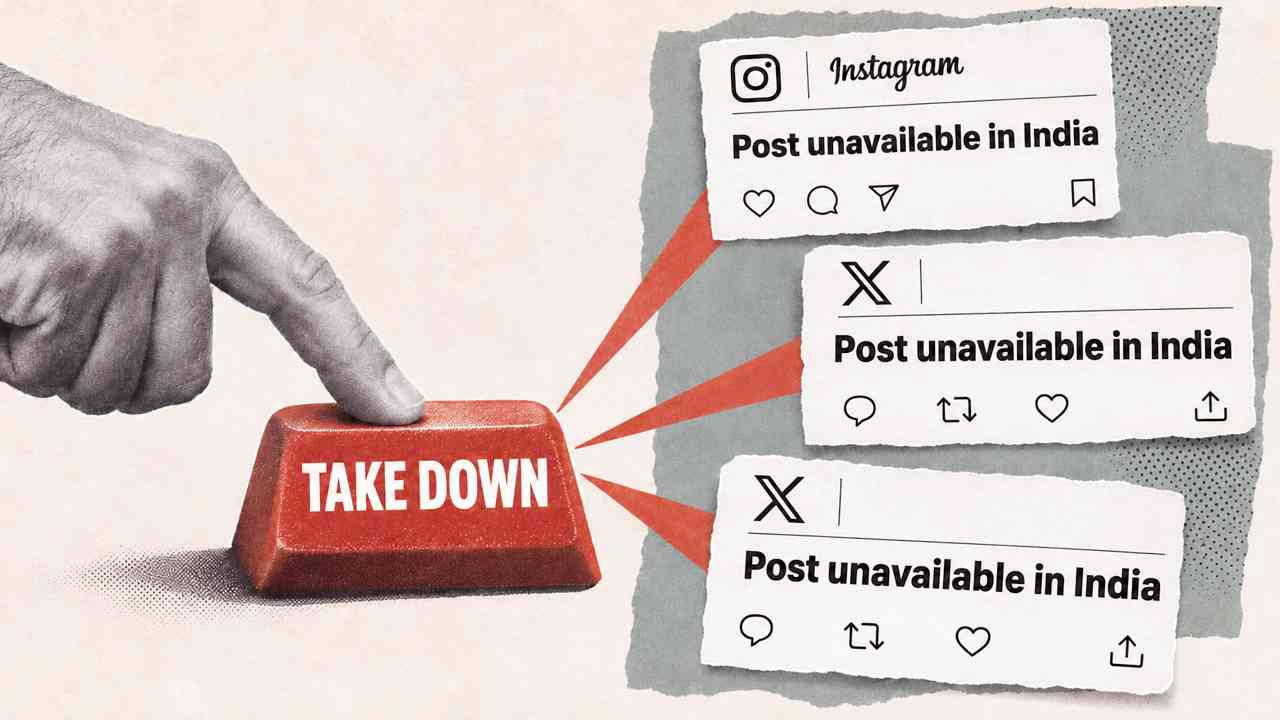
- When AQI readings crossed 1,000 at several locations, and one area reported PM2.5 levels above 3,000, several government monitoring stations stopped reporting data.
- As if all this were not enough, air pollution was dropped from the agenda for this year’s winter session of Parliament, just as it was last year.
The pattern is clear. The BJP’s ecosystem has presided over some of the worst air on record, and it has responded the only way it seems to know: with propaganda and distraction. Delhi’s Environment Minister proudly announced that the city had recorded 220 “clean air days” this year. He left out that this figure counts every day in the “good”, “satisfactory” and “moderate” categories, which means any day with an AQI of up to 200. Delhi’s air was actually rated “good” (an AQI of 50 or below) on just one day, and India’s standards are already far looser than the WHO’s. Then came the familiar blame game, with other state governments and opposition parties made the scapegoats, above all over stubble burning. Meanwhile, sitting chief ministers keep making scientifically baseless claims. Our institutions still refuse to treat air pollution as the public health emergency it is, even though peer-reviewed studies link around 1.7 to 2 million deaths in India every year to polluted air.
This failure cannot be seen in isolation. It reflects the government’s abysmal environmental record as a whole, from relaxing sulphur dioxide norms for coal-fired power plants to its steady refusal to treat long-term climate action as a priority. Air pollution is simply where this neglect becomes impossible to ignore, because we breathe it every day, and every independent measure tells the same story. India ranked 176th out of 177 countries in Yale’s Environmental Performance Index 2026, with a score of just 22.46. Only Laos ranked lower, and India came 7th of 8 countries in South Asia. On climate action, India has fallen in the Climate Change Performance Index for two years running, from 10th in 2025 to 23rd in 2026 and 28th in 2027, largely because it depends on coal and has no timeline for exiting it. That is the same coal now allowed to keep poisoning our air. IQAir’s 2025 World Air Quality Report ranked India the sixth most polluted country in the world. New Delhi was again the most polluted capital, with an annual PM2.5 average of 82.2 µg/m³, more than 16 times the WHO guideline, and Loni, just across Delhi’s border, was the most polluted city on the planet. Even the government’s flagship National Clean Air Programme is quietly failing. Of the 100 cities with enough data, 23 have seen PM10 levels rise since it began, and only 23 have met the revised 40% reduction target. Twenty-eight of the 130 programme cities still have no continuous monitoring station, and Delhi has used less than a third of the clean-air funds it received. These are not the numbers of a government that tried and fell short. They are the numbers of a government that never treated clean air, the environment or the climate as a priority at all.
Citizens Have Taken Note
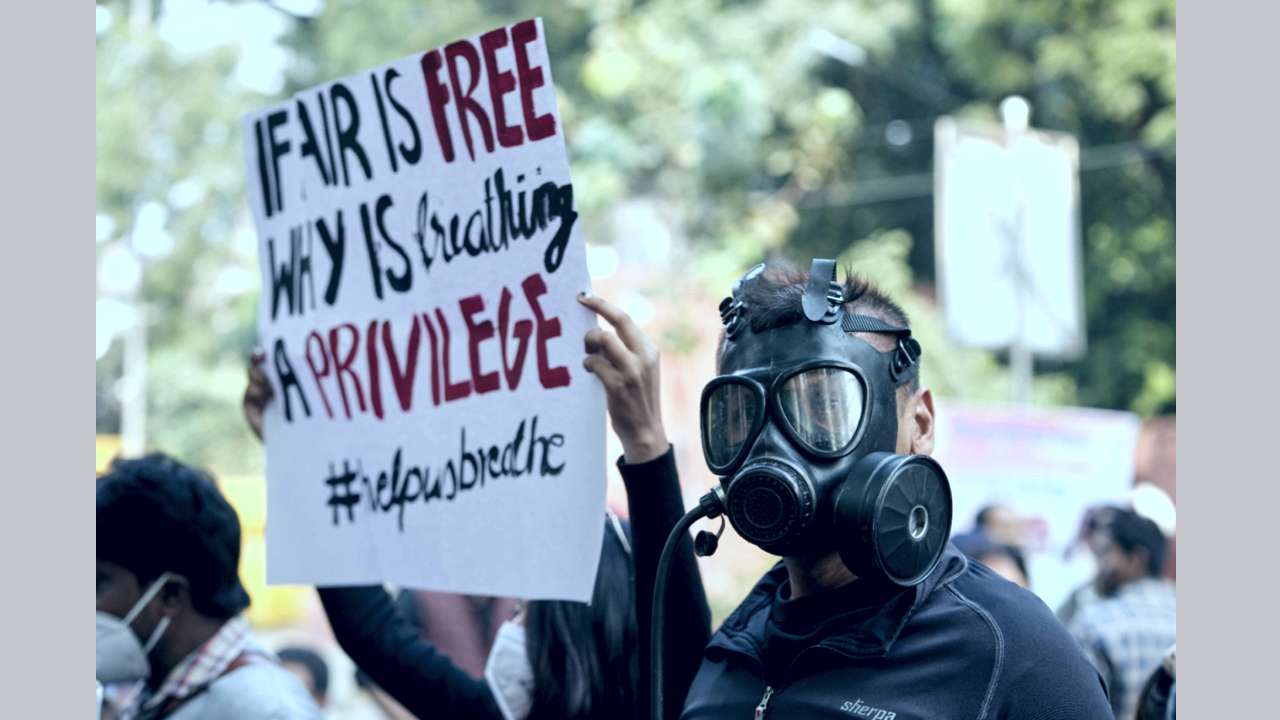
But something has changed. Citizens are no longer willing to accept poisonous air as an annual ritual. Last winter, parents, students and activists gathered at India Gate to demand their right to breathe, and many were detained for it. This year, the anger has only grown. Students have protested on university campuses, including at Delhi University. For the first time in many years, a citizens’ delegation of students, environmentalists, mothers’ groups and former members of government advisory panels took the matter directly to the Union Environment Ministry. The ministry tried to placate them with assurances that pollution was its “highest priority”. The delegation refused to back down and carried its demands to the officials.
These are not isolated outbursts. They mark the moment the public stopped treating air pollution as bad luck or bad weather and started seeing it for what it is: a political choice.
The Fight Ahead
Air pollution, the environment and climate action are political priorities, and they must be fought for as political priorities. A government shaped by crony capitalism answers to the industries that pollute, not the people who breathe, and it will never put citizens first on its own. It will count “clean air days” while children’s lungs are scarred. It will blame its neighbours while its monitoring stations go dark. It will drop the issue from Parliament’s agenda while millions choke.
The responsibility therefore falls on us. Citizens must stand together across neighbourhoods, cities and states, and keep up the pressure on this regime until it either solves the crisis or makes way for a government that will. Our right to breathe is not negotiable, and neither is our right to life.