In 1978, a seven-judge bench of the Supreme Court in Bangalore Water Supply and Sewerage Board (BWSSB) v. A. Rajappa, gave the word "industry" a wide construction and found that any systematic activity, organised through cooperation between employer and employee, undertaken for the production or distribution of goods and services to satisfy human wants, would qualify as an industry; this was irrespective of a profit motive. When this judgment was written, Justice Krishna Iyer was explicit about its interpretive stance that – “a worker-oriented statute must receive a construction where conceptually, the keynote thought must be the worker and the community, as the Constitution has shown concern for them inter alia in Articles 38, 39 and 43”. The effect of this judgment was to bring hospitals, educational institutions, charitable bodies, and government departments within the protective reach of the Industrial Disputes Act, 1947, alongside conventional commercial enterprises like factories, formal workspaces, etc.
This construction of the definition of ‘industry’ was tested and preserved until 2005, when a five-judge bench, in State of UP v. Jai Bir Singh, was called upon to decide a comparatively narrow question. This dispute had to decide whether a state forestry department constituted an industry. With this came an occasion for employers to mount a challenge to the test laid down in the BWSSB judgment. The neo-liberal ideology was clearly visible in the judgment, which observed that “over-emphasis on the rights of the workers and undue curtailment of the rights of the employers... have given rise to a large number of industrial and labour claims resulting in awards granting huge amounts of back wages,” and that an expansive definition might operate as “a deterrent to private enterprise in India”. On this reasoning, that the wide reading of “industry” had become inconvenient to ‘enterprise’, the bench referred the question to a larger bench for reconsideration.
It is worth pausing on what the judgment meant by “over emphasis on the rights of workers…”, since the 2005 bench's characterisation of workers’ rights as burdensome, bears little relation to its actual content. In fact, the Industrial Disputes Act does not confer extraordinary entitlements upon workmen. It establishes an institutional architecture of conciliation officers, labour courts and industrial tribunals for the investigation and settlement of disputes and prescribes procedural safeguards, including notice and compensation, governing lay-off, retrenchment and closure. To describe this framework as unduly protective of labour is to wrongly claim that the unregulated exercise of powers exercised by the employers over employees does not require any accountability measures, and any checks on that means an imposition on the management.
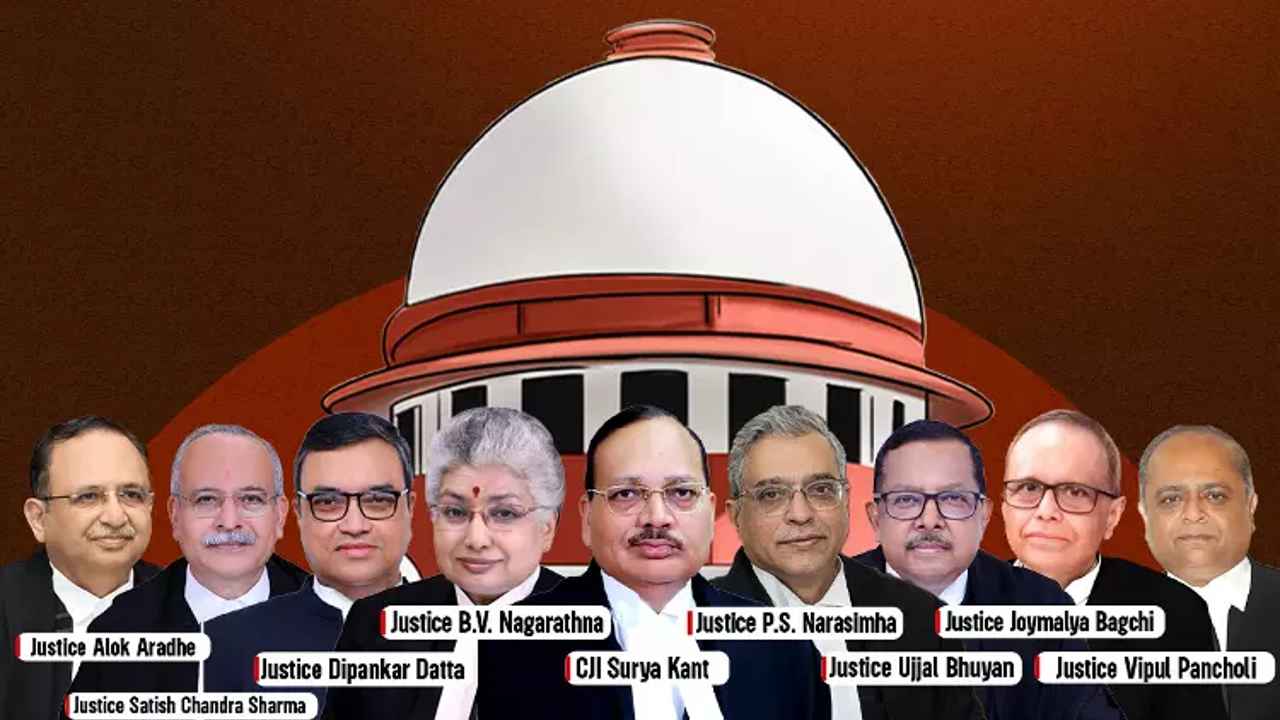
The outcome of the judgment of the nine judges in Bir Singh is a preservation of the status quo. The Chief Justice's opinion in the August 20th, 2026 judgment, which was written for himself and three other judges, proposed a narrower test, which he himself held would be hypothetical and inapplicable to pending cases. Despite other differences among the judges, the bench was unanimous that the interpretation developed in BWSSB would continue to govern all matters that arose under the Industrial Disputes Act.
By the time the reference was finally answered, the Industrial Disputes Act itself had been repealed and replaced by the Industrial Relations Code. The larger question this judgment leaves us with is not merely a technical question, but one which impacts the lives of lakhs of workers. Where the disparity in bargaining power between workman and employer is beyond dispute, what does it mean to actually protect the weaker side? The Industrial Relations Code, is narrower by design, excluding entire categories of institution and imposing thresholds resulting in lakhs of workers being pushed outside the law. This is true of the other Labour Codes as well.
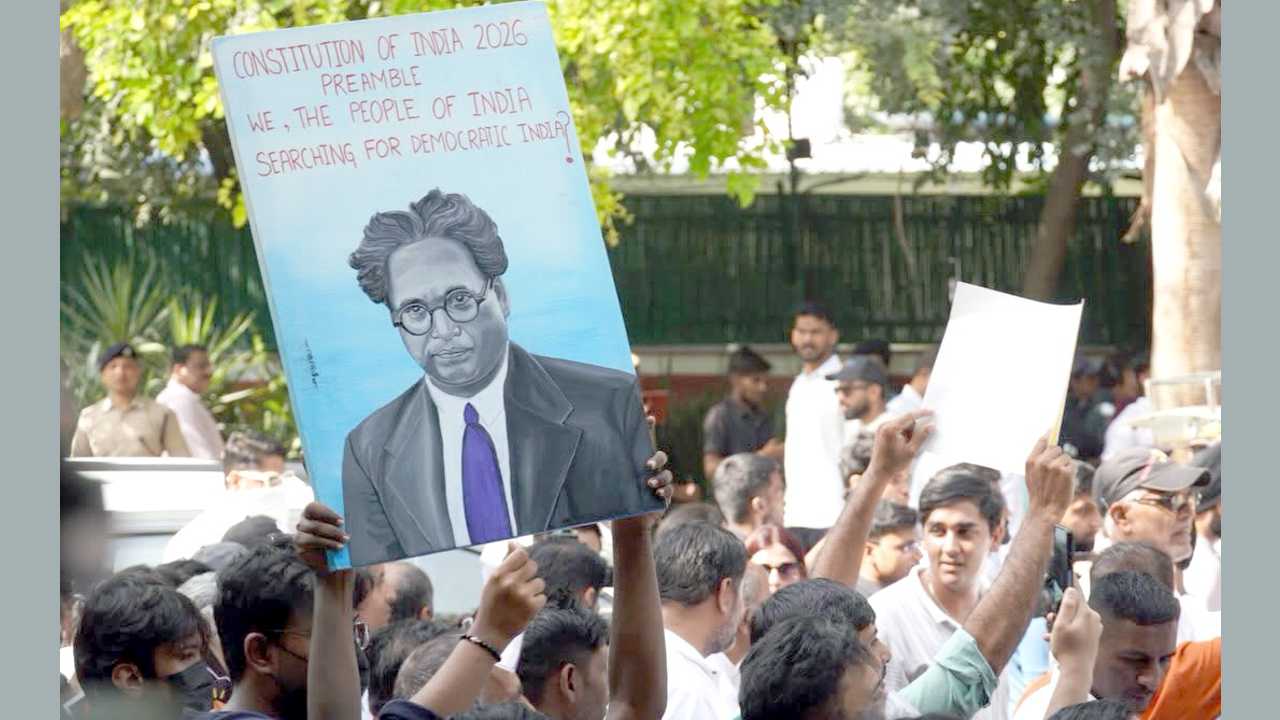
Dr. Ambedkar's warning about unregulated industrial relations speaks directly to what follows, where the State declines to make the rules, the private employer will make them instead, and the result is the "dictatorship of the private employer." It is toward exactly such a dictatorship that these new Labour Codes of Slavery lead. The working class must resist them, and resist them decisively, to ensure that rights won through decades of struggle are not stolen.