
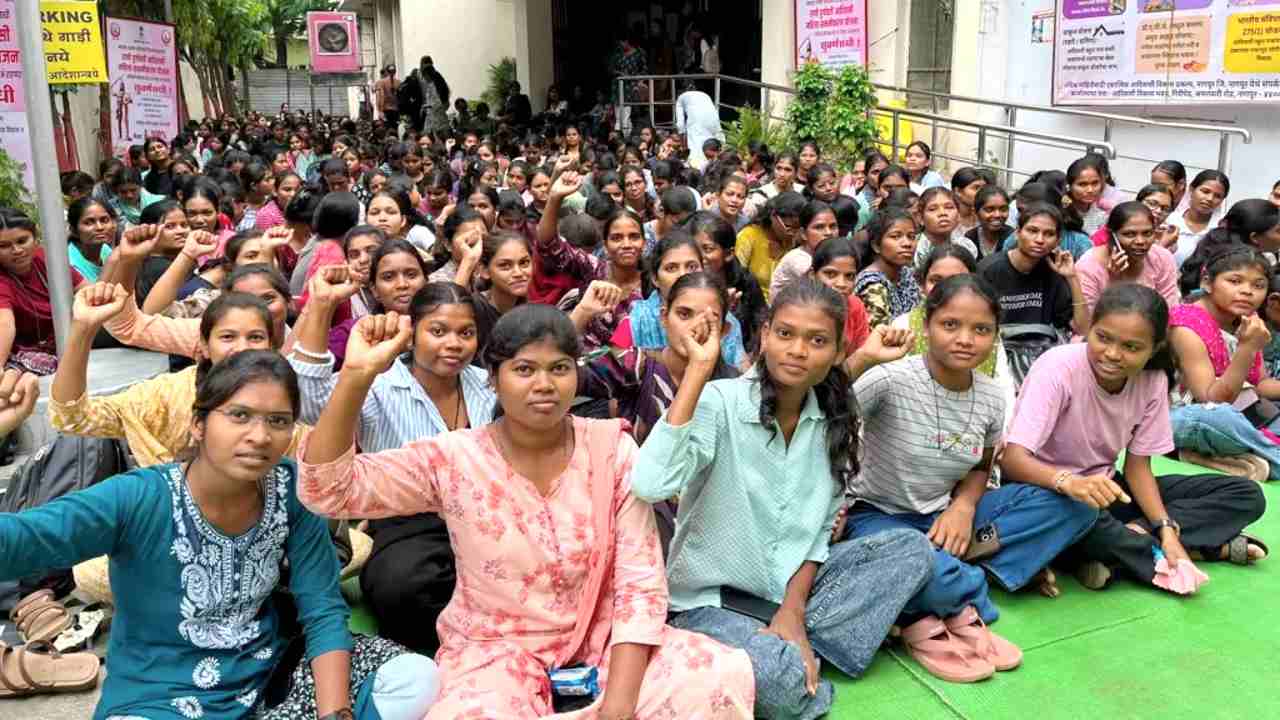
The immediate trigger for this movement was the Maharashtra government's order dated August 5, 2026, regarding adivasi hostels. This order tightened admission rules and, more seriously, attempted to restrict hostel students from participating in hunger strikes, marches, and similar forms of protest. More than 1,000 Adivasi students gathered to protest outside the office of the Additional Tribal Development Commissioner in Nagpur. The protest spread rapidly to other districts, and the government was eventually forced to withdraw the restrictions on students' right to protest.
However, the movement did not stop there. Students put forward broader demands. A 29-point charter of demands submitted by the Adivasi Vidyarthi Sangh of Vidarbha-Nagpur, along with its Gondia and Bhandara district branches, demanded hostel facilities, recruitment, reservation, healthcare, safety, education, and the governance of adivasi institutions. It also included filling large number of vacant reserved posts, improving hostel infrastructure, providing emergency medical facilities, enhancing security, and fixing accountability for deaths in ashram schools (residential adivasi schools).
The Dispute Over 490 Adivasi Hostels
One of the most politically significant issues to emerge from this movement concerns 490 government-run adivasi hostels. The Tribal Development Department has signed a three-year memorandum of understanding with the Laxmanrao Mankar Smruti Sanstha to run educational, career, and personality-development programs for hostel students. According to the government, ownership, buildings, and administrative control of the hostels will remain with the government, while the organization will carry out these activities free of charge.
However, adivasi organizations and protesting students oppose this arrangement. They argue that giving a private organization a role in managing hundreds of government hostels is a step toward privatization of government institutions, and cancellation of this agreement has become one of the movement's key demands. The government, however, maintains that no privatization has taken place. This has left two opposing views on the issue – one seeing it as a supplementary educational partnership, the other as gradual privatization. The background of the organization involved has made this dispute even more sensitive.
Education Without Dignity Is Not Education
The movement has also drawn attention to the day-to-day conditions in government hostels and ashram schools. Demands include, scrapping the DBT (Direct Benefit Transfer)-based food system in district hostels in favour of functioning kitchens in every hostel, arrangements for safe and dignified accommodation, construction of new buildings in place of unsafe ones, and relocation of ashram schools from remote areas, where basic facilities cannot be provided.
Demands have also been made for ambulances or round-the-clock medical transport at larger hostels, anti-venom medication for snakebites, emergency medical supplies, and reimbursement of treatment costs where government facilities are unavailable. These demands have taken on a particular urgency in light of deaths and medical emergencies at ashram schools. Protesters are demanding high-level investigations into these deaths, fixing accountability not just on individual negligence but, on the institutions responsible for food, health, and safety, as well as CCTV cameras, security staff, fire safety, and properly equipped first-aid centers.
The Question of Girls' Dignity
One of the most troubling issues raised in this movement concerns complaints of urine pregnancy tests (UPT) being administered to girls. In 2025, allegations emerged that pregnancy tests were conducted on students at a adivasi girls' hostel in Wakad, Pune, under the guise of routine health check-ups. It was alleged that neither the students nor their parents had given consent, and the matter was taken up by the Maharashtra State Commission for Women.
Similar complaints have surfaced in Gadchiroli and other districts, though these reports have not yet been confirmed and cannot be treated as an established fact. The Tribal Development Department has clarified that such tests are not an official requirement, stating that no government resolution orders UPT testing in ashram schools or hostels.
Employment, Reservation, and Forest Rights
The movement's focus is not limited to hostels – economic security is central as well. Student organizations have demanded that 12,500 vacant posts reserved for Scheduled Tribes be filled, that the existing reservation roster be protected, and that a time-bound plan be created to clear the backlog. They have also demanded action against appointments allegedly made using fraudulent caste certificates, and reinstatement of eligible employees appointed through the PESA process.
In districts like Gadchiroli, adivasi life is deeply tied to forests and community land. Conflicts related to mining, forest land, and the rights of gram sabhas (village councils) remain central to the region's politics. As of January 2026, 14,726 claims under the Forest Rights Act were pending in Maharashtra – 6,158 claims and 8,568 appeals – according to central government data released in April 2026.
Citizens, Not Beneficiaries
A defining feature of this movement is that the new generation of educated adivasi youth are not simply asking for scholarships or welfare schemes. They are raising fundamental questions: How are institutions run? Who controls public resources? Why do student deaths occur precisely within institutions created to protect them? Why are decisions affecting their lives made without consulting them?
Protests and hunger strikes took place in Manjari (Pune), Nagpur, Nashik, and other districts over these demands. After a 17-day hunger strike, the Maharashtra government announced on August 29, that it had accepted the students' demands, giving written assurances on filling vacant ST posts, hostel food arrangements, medical facilities, and reservation issues. However, acceptance on paper is only a beginning, implementation remains the real test.
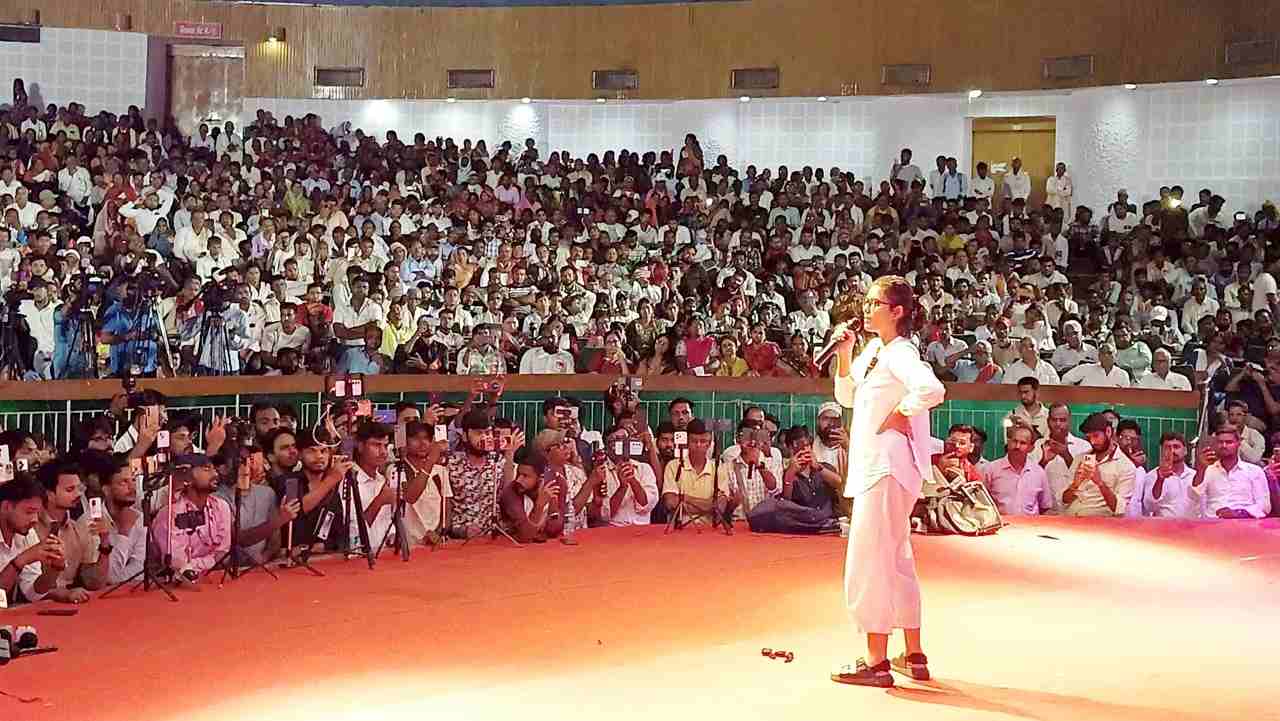
The AISA All India President Comrade Neha visited the Adivasi students’ protest site in Nagpur to understand the students' issues and extended AISA's public support to the movement. Given the seriousness of the issues raised by these students, she described the situation as an assault on students' dignity, condemned practices such as pregnancy tests that harm the character and personal dignity of adivasi girls, and called for a sustained struggle to end such practices.
This movement is not simply a protest against one government order or one hostel policy, but reflects years of accumulated grievances: education without infrastructure, reservation without timely recruitment, rights without enforcement, welfare schemes without dignity, and institutions without accountability.
The dispute over 490 hostels, questions about the treatment of girls, the state of ashram schools, the demand to fill 12,500 posts, and the struggle over pending forest rights all point to one fundamental demand: that institutions built in the name of adivasi communities must actually work for adivasi communities.
The Ulgulan which started in Vidarbha ashram schools taking up their demands for limited reforms has now spread over to other parts of Maharashtra and adjoining states on much wider demands of jal, jungle and jameen and adherence to PESA provisions.
This 'Ulgulan' (uprising) taking shape in Vidarbha and other parts of Maharashtra is not merely an outburst of anger, it is the voice of a new generation refusing to remain passive beneficiaries of government schemes. Their firm demand is for rights as equal citizens, for dignity, and for a voice in decisions that shape their future.