Football’s working-class roots, emotional appeal and widespread popularity made it a site of social and political struggle from its inception. The tussle became vastly unequal with the entry of corporations, which allied with powerful states to amplify their profits at the cost of the fans and, as we shall suggest, the game itself. In the process, they have corporate-washed crimes of politicians and dictators.
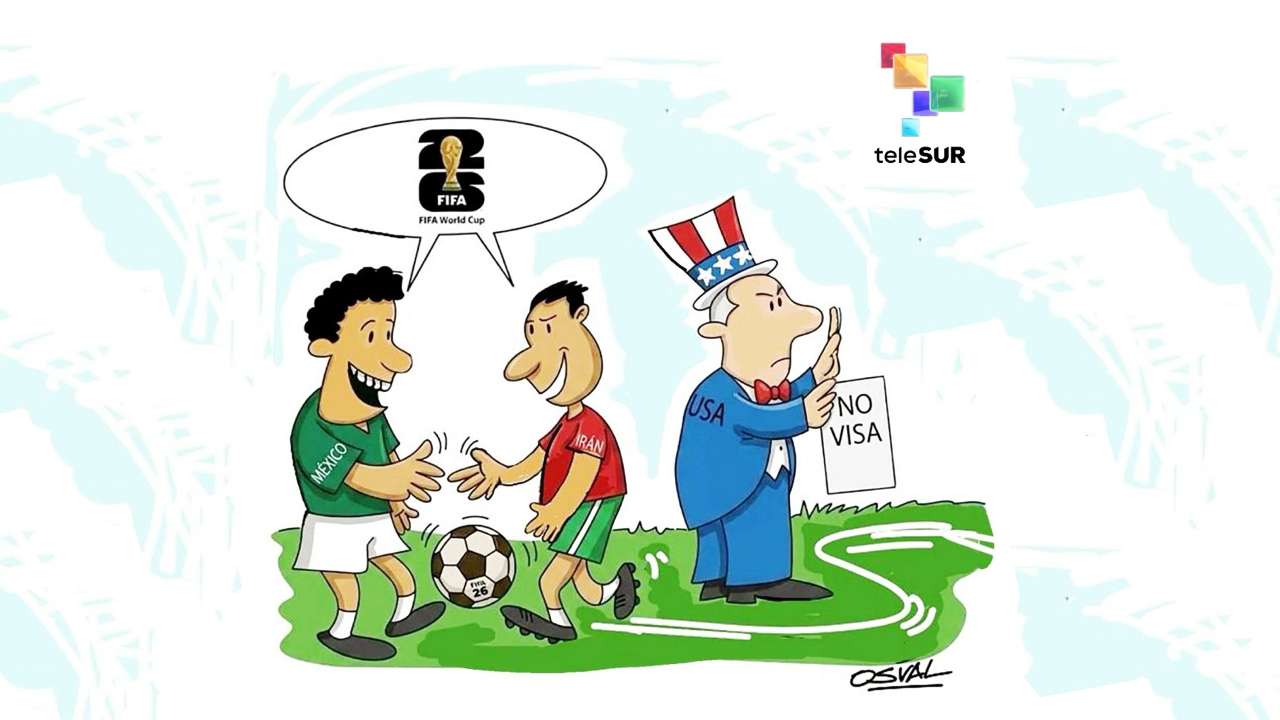
The 2026 tournament has faced widespread criticism for visa denials affecting fans, officials, and even a designated referee, as well as accusations of using the event for political posturing by Trump. All of this is being corporate-washed by sponsors, who have priced fans out of the game through astronomically high prices for ticket, food, water, parking and every other thing that can be charged.
The corporate dominance that we see today is the culmination of a long process. In this article we examine the long history of global football’s restructuring by capital, its effects on the shape and form of the beautiful game, and why football must remain a site of resistance despite such corporate dominance.
Football’s links with capital have developed hand in hand with the larger shifts in the global economy. The 1960s witnessed the assertion of newly independent Asian and African countries in the world of football. Administrators allied with corporations to expand the reach of the game, but also paved the way for global businesses to profit from the game’s wide appeal; both at one and the same time.
FIFA, UEFA and the Money Game
In 1974, the Brazilian businessman and sports administrator Joao Havalange launched a successful bid for the FIFA Presidency, with the promise of accommodating Asian and African interests and taking the game to new frontiers. Coca Cola and Adidas emerged as willing sponsors of Havelange’s promise of an expanded 24-team World Cup and new tournaments like the FIFA Youth World Cup.
The first 24 team World Cup was held in 1982, featuring 34 official sponsors, marking the tournament’s first organized corporate sponsorship program. Coca-Cola served as the cornerstone of the sponsorship package, while Adidas supplied the official match ball, the Tango España. By the 1986 World Cup held in Mexico, advertisement and television rights had replaced the returns from ticket sales as the mainstay of FIFA’s revenues.
The Union of European Football Associations (UEFA) and the big European clubs were the next to capitalize on the commercial potential of football and the aspirations of the post-colonial world. Up until 1992, UEFA’s European Cup was a competition between the champions of the European domestic leagues. In 1992, UEFA rebranded the European Cup as the UEFA Champions League, with major changes in revenue arrangements.
In the rebranded competition, the participating clubs ceded the broadcasting rights of their matches to UEFA, which in turn arranged for centralized broadcasting through its new media partner Team Marketing AG. In return, the clubs received fixed payments for participation which increased with qualification for each successive stage of the competition.
The new media partner, through aggressive and innovative marketing, maximized the revenues from the competition, vastly improving the prize money, which made participation in the Champions League a profitable affair for the clubs. However instead of distributing the profits equitably, UEFA allowed the leading European clubs to absorb a large share of the profits by granting a larger percentage of the Champions League spots to the national leagues of Spain, Italy,England, and Germany.
Earlier, each club had to win their domestic league in the previous season in order to gain entry into the European Cup for the next season. By permitting multiple entries from the big leagues, UEFA virtually guaranteed the participation of big clubs such as AC Milan of Italy, Real Madrid and FC Barcelona of Spain, Manchester United of England and Bayern Munich of Germany. With the huge prize money on offer, they could buy the best playing and coaching talents of the world, regularly finish in the top end of their domestic leagues and repeatedly compete in the Champions League, emerging as faces of the competition.
Europe Shines, Others Decline
The huge influx of money raised the game’s profile and improved the lives of many working-class footballers. At the same time, the concentration of resources and talent in a few top European clubs had a detrimental effect on the game in other parts of the world. It relegated localized organic football traditions to global football’s periphery, which eventually altered the character of international football. The decline of the much-vaunted Brazilian tradition is a case in point.
The Brazilian ‘Joga bonito’ tradition appears to have emerged towards the middle of the twentieth century, following the national team’s debacle in the 1950 World Cup. Brazilian footballers, often coming from impoverished working-class families barely had the strength to play hard-tackling football like the Europeans. So, they became trickers – the ‘malandro’ of Brazilian folklore – who broke rules without being caught. Through shrewd body movements, clever dribbling, back-heel passes and bicycle kicks, Brazilians dazzled their way to victory in the World Cups of 1958, 1962 and 1970.
Brazil won the World Cup again in 1994, but this time they played what many of their countrymen called ‘bureaucratic football’ – more muscular and tactical than artistic and freestyle. There have been sparks and flashes since then, but the ‘Brazil of old’ is now a largely nostalgic term in football. This relation between this decline and the power shift towards Europe since the 1980s is unmistakable.
The 1982 World Cup was the last time Brazil truly displayed the art of the ‘malandragem’. At this point, only one of the 22 players in the squad played his club football in Europe. In comparison, the star players in the next generation – Ronaldo, Rivaldo, Ronaldinho, Kaka, and Neymar –all departed for Europe in their early twenties. While these star players retained key elements of the Brazilian style, Brazilian players of the next generation completely integrated themselves into the playing styles and cultures of European clubs, hardly displaying classical Brazilian flare.
Notably, after 1994, the only time Brazil won the World Cup was in 2002. That team featured all-time great talents such as Ronaldo, Rivaldo, Ronaldinho and Roberto Carlos. Since then, Brazil has been knocked out by arguably the first tough European team they faced. Other Latin American teams such as Argentina dazzle on the international stage only when they have exceptional players such as Lionel Messi.
Effects of the ‘Leg Drain’
The former World Bank economist Branco Milanovic argues that when players from different continents play together for the European clubs, poor countries can capture some of their ‘leg drain’ and harness the forces of efficiency unleashed by globalization for their benefit. This hardly holds true for Latin American teams. It was the vibrant football traditions of Latin America that had historically enabled them to beat Europeans with ease; these now stand drastically weakened by football’s Euro-centrism.
The argument about turning the ‘leg drain’ upside down does not quite hold true for Asia and Africa either. On the one hand, African teams, with many of their players based in European clubs, have managed to trouble European and Latin American teams in international tournaments since the 1990 FIFA World Cup. Memorably, Senegal, with 20 out of 22 squad members based at French clubs, beat France 1-0 in the opening match of the 2002 World Cup. This defeat eventually sent France, the defending champions, out of the World Cup after the first round.
On the other hand, doubts arise as to whether Africa has really joined the party. African teams reached the quarter final on only two other occasions since 1990 (when Cameroon reached the quarter final) – Senegal in 2002, and Ghana in 2010. Only once in all these years has an African team (Morocco) reached a semi-final; it happened as late as 2022. This is meagre return for decades of ‘leg drain’. As for Asia, South Korea remains the only Asian team to reach the World Cup’s last eight (in 2002, when they were the hosts).
In order to offset the ‘leg drain’, FIFA and the regional football associations have promoted the use of football for ‘social development’. In 2007, FIFA and the football governing bodies of North, Central and Latin America signed a Memorandum of Understanding with the Inter-American Development Bank (IDB) to jointly invest in projects for the development of life skills among youth, violence prevention and the improvement of education and employment opportunities.
Such efforts, though valuable in themselves, tend to whitewash the role of FIFA and the big European clubs in unjust practices such as child labour. While FIFA and the International Labor Organization (ILO) have vowed to wave a ‘red card to child labour’, Nike and Adidas – key football sponsors – are widely reported to indulge in such practices.
While there have been scattered efforts to constitute alternative football cultures away from mainstream football, episodes of dissent in the top tier of football against the state-corporate nexus are rare. Occasional statements against racism from a Gary Lineker or an Ian Wright, or pro-Palestine statements from Pep Guradiola, are rare instances when leading football figures speak out. These episodes give us a glimpse of what might be, if footballers were to exercise their power for progressive, democratic causes.